
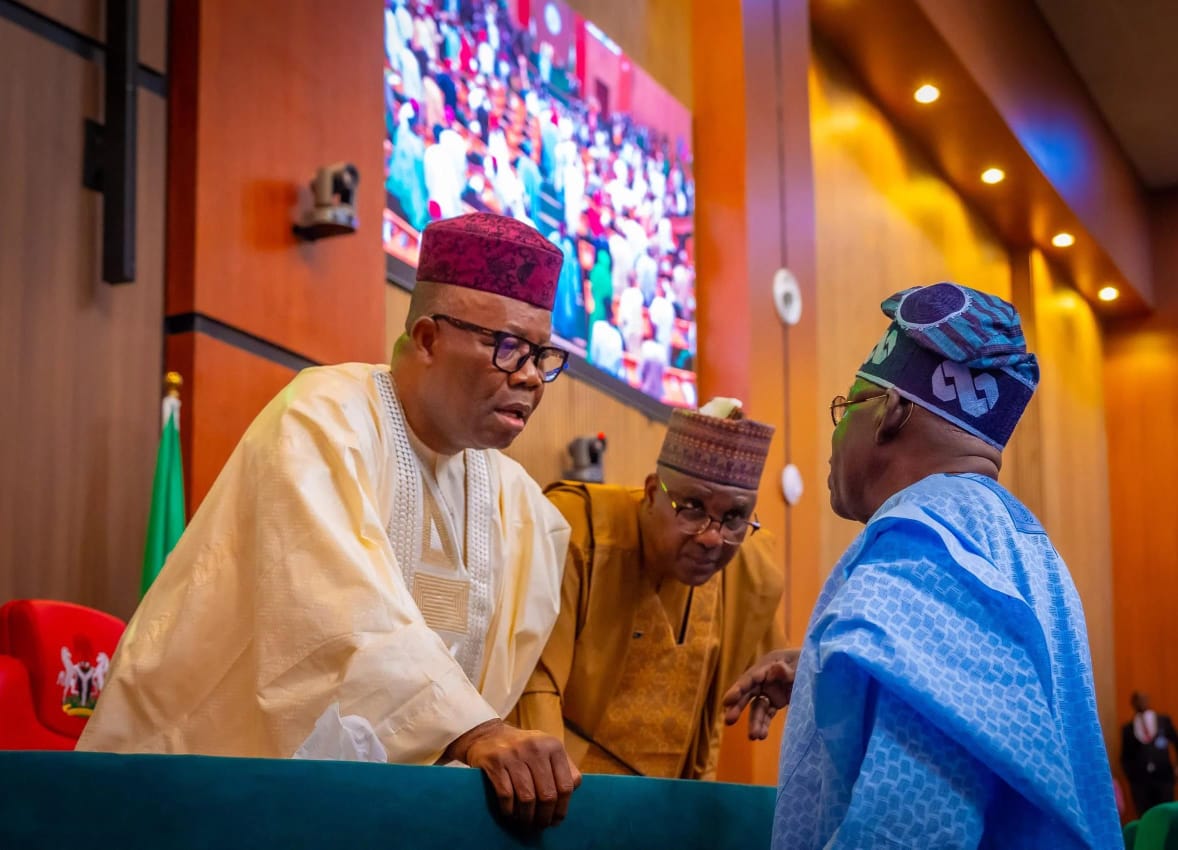
As many states in Nigeria battle insecurity with governors unable to decisively tackle the challenge, President Bola Tinubu on Tuesday transmitted a constitutional amendment bill seeking to establish state police to the Senate, a move that aligns with calls for policing reforms in line with robust federalism.
Mr Tinubu said the proposed legislation, titled, “Constitution of the Federal Republic of Nigeria (Alteration) State Police Bill, 2026,” with 26 clauses, seeks to create additional policing structures “to better protect our citizens.”
The bill to decentralise the police was passed in the House of Representatives on June 11 and also passed by the Senate on Wednesday.
If enacted into law, state police would be established, funded, and managed by the state governments, functioning alongside the Nigeria Police Force to tackle growing terrorism, banditry, cybercrime, kidnapping for ransom, and herder-farmer conflicts.
Over the years, there have been calls for state police, with advocates arguing that it would strengthen grassroots security by identifying local threats, fostering intelligence gathering, strengthening collaboration with traditional rulers, ensuring quicker response to insecurity in rural areas, and easing the burden on the federal police.
While the bill has received overwhelming support from state governors, civil society organisations, security experts, and politicians, critics have raised concerns that it could be misused to suppress dissent and intimidate political enemies and that states with low revenue could struggle to fund the institution.
For all breaking news and latest gist:
👉 JOIN GISTSMATE WHATSAPP CHANNELFrom the legislative process to collaboration with the federal agency to the appointment of police commissioners, the Peoples Gazette has compiled a list of eight things to know about the police bill.
*For the bill to become law, despite its passage by both chambers of the National Assembly, at least 24 state assemblies must also approve it. If it fails to secure the required support, the amendment process will halt.
*State police will work alongside the federal agency. While the state police would handle local policing and crime detection and enforce state laws, the federal police would continue to focus on terrorism, organised crime, cybercrime, border security, and other national security matters.
*The bill empowers state governors to appoint police commissioners, but it is subject to confirmation by state assemblies and advice of the National Police Council. However, their removal would require the approval of a two-thirds majority of the state assembly.
*Under Section 17(6), the governors, as custodians of their respective states, may issue directives on public safety and order. Here, the National Police Council can challenge a governor’s directive deemed unlawful.
*The bill prohibits federal police from routinely interfering in the internal security affairs of state police and permits intervention only under limited circumstances, including issues bordering on national security threats, the breakdown of laws, critical rights, and electoral intimidation, among others. Such an intervention would be subject to presidential approval and Senate oversight.
*To address concerns about the potential weaponisation of state police, Section 17(7) provides measures to prevent abuse by prohibiting their use against critics of government or political parties.
*While there have been concerns about funding of the institution, especially by states with low revenue, Clause 14(b) postulates that the federal government “may” provide grants to state police, but this is subject to approval by the National Assembly and the Federal Police Service Commission’s recommendations.
*Clause 16 of the amendment bill provides for the establishment of the State Police Service Commission, comprising six retired police officers from the six geopolitical zones in the country and not below the rank of assistant commissioner of police. The president appoints them, and their appointments must be confirmed by the Senate.
WARNING: If You Are Not 18+, Don’t Click The Link Below 👇🫣
Did you want to monetize your website, join MONETAG or ADSKEEPER and start earning
Please don’t forget to “Allow the notification” so you will be the first to get our gist when we publish it.
Drop your comment in the section below, and don’t forget to share the post.
Never Miss A Single News Or Gist, Kindly Join Us On WhatsApp Channel:
https://whatsapp.com/channel/0029Vad8g81Eawdsio6INn3B
Telegram Channel:
https://t.me/gistsmateNG