
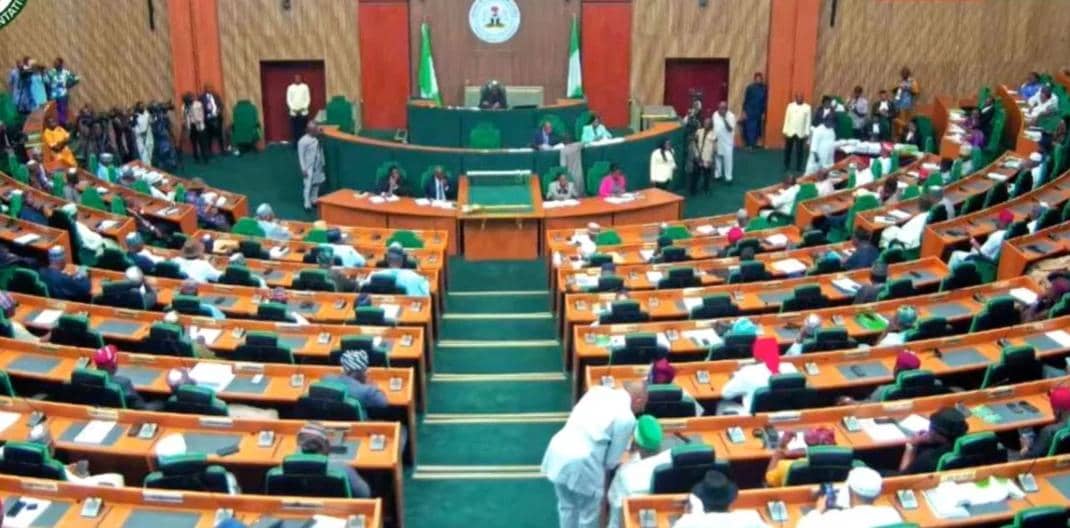
The House of Representatives has passed for second reading a bill seeking to amend the National Senior Secondary Education Commission Act, 2023, to strengthen the administration, governance and funding of public senior secondary education across Nigeria.
Speaking on the general principles of the National Senior Secondary Education Commission (Amendment) Bill, 2026, the Majority Leader, Hon. Julius Ihonvbere, explained that the proposed legislation sought to address challenges confronting the senior secondary education system through improved institutional structures, infrastructure development and a more effective framework for allocating intervention funds.
The proposed legislation, which was transmitted to the House by the Presidency last week, also seeks to expand the scope of Federal Government interventions to cover public senior secondary schools in the 36 states and the Federal Capital Territory (FCT), as well as Federal Unity Colleges and Armed Forces Senior Secondary Schools.
According to the explanatory memorandum, the bill is designed to strengthen the administration and governance of public senior secondary education in Nigeria by amending several provisions of the existing law.
Under the proposed amendment, the National Senior Secondary Education Commission (NSSEC) would provide interventions for physical infrastructure, instructional materials and laboratory equipment to improve teaching and learning in eligible public schools.
The bill specifically proposes an amendment to Section 20 of the principal Act to empower the Commission to provide infrastructure and other educational resources to Federal Unity Colleges, public senior secondary schools across the states and the FCT, as well as schools operated by the Armed Forces.
For all breaking news and latest gist:
👉 JOIN GISTSMATE WHATSAPP CHANNELThe executive bill also seeks to establish a Senior Secondary Education Board in each state and the FCT as a requirement for accessing Federal Government interventions under the amended law.
The proposed amendment provides that each state education board would have a part-time chairman, who would be the commissioner responsible for secondary education, alongside three members representing the state’s three senatorial districts.
Other members would include representatives of the state ministries responsible for education and finance, the All Nigeria Confederation of Principals of Secondary Schools, a recognised education-focused civil society organisation and the board’s executive secretary.
For the FCT, the bill proposes a similar structure, with the Mandate Secretary responsible for secondary education serving as chairman and one member representing each of the six area councils.
The FCT board would also include representatives of the relevant education and finance departments, the principals’ association, an education-focused civil society organisation and an executive secretary.
Under the proposed provisions, state education board chairmen and members would be appointed by their respective governors, while appointments to the FCT board would be made by the Minister of the Federal Capital Territory.
The bill further proposes the appointment of an executive secretary for each state and FCT education board, who would serve as its chief executive and accounting officer. The appointee must be an experienced educationist or administrator with at least 20 years of relevant experience.
The executive secretaries would serve initial four-year terms and could be reappointed for one additional term, subject to the terms and conditions specified in their letters of appointment.
Another significant provision seeks to revise the mechanism for managing the Commission’s intervention fund by replacing references to the disbursement of funds with allocation, while stipulating that allocations to state and FCT education boards would follow criteria established by the Commission and approved by the minister.
The proposed framework also provides for direct interventions in Federal Unity Colleges and Armed Forces Senior Secondary Schools, based on criteria set by the Commission and approved by the minister.
Additionally, the bill seeks to require state and FCT education boards to submit annual action plans outlining the projects, programmes and policies they intend to undertake to the Commission, thereby introducing a structured planning mechanism for interventions in the sector.
The proposed amendments also include changes to the composition and conduct of board meetings, the removal of the definition of counterpart funding from the Act and other adjustments intended to improve the Commission’s operations.
If passed by both the House of Representatives and the Senate and subsequently assented to by the President, the National Senior Secondary Education Commission (Amendment) Act would provide a revised legal framework for coordinating Federal Government interventions and strengthening the administration of public senior secondary education across the country.
WARNING: If You Are Not 18+, Don’t Click The Link Below 👇🫣
https://nya5.com/link?z=11857196&var=
Did you want to monetize your website, join MONETAG or ADSKEEPER and start earning
Please don’t forget to “Allow the notification” so you will be the first to get our gist when we publish it.
Drop your comment in the section below, and don’t forget to share the post.
Never Miss A Single News Or Gist, Kindly Join Us On WhatsApp Channel:
https://whatsapp.com/channel/0029Vad8g81Eawdsio6INn3B
Telegram Channel:
https://t.me/gistsmateNG