
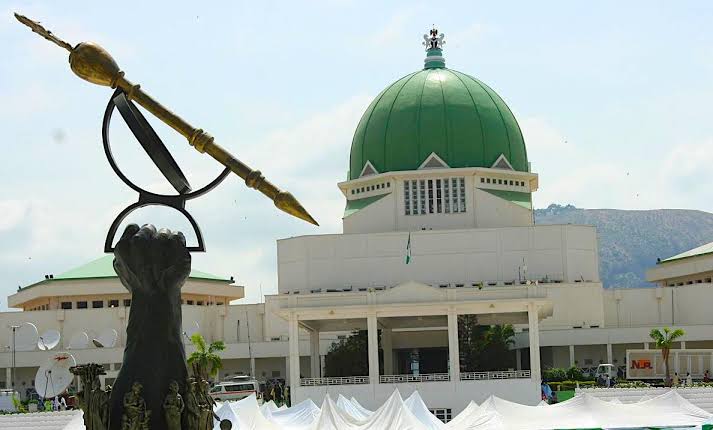
The long-awaited Constitution Review Bill, otherwise known as the Constitution of the Federal Republic of Nigeria, 1999 (Sixth Alteration) Bill, 2026, has been transmitted to the 36 State Houses of Assembly for consideration and approval.
The sixth alteration focussed on 12 thematic areas, namely: Electoral Reforms, Judicial Reforms, Security and Policing, Local Government Administration, Inclusive Governance and Citizenship, Legislature, Devolution of Powers, Human Rights, Fiscal Reforms, Strengthening of Institutions, Traditional Institutions as well as Creation of States and Local Governments.
The Clerk to the National Assembly (CNA), Barrister Kamoru Ogunlana, confirmed the transmission of the bills in a statement made available to Parliamentary Correspondents in Abuja on Wednesday.
Ogunlana said the transmission marked the commencement of the next stage of the constitutional alteration process, requiring the State Houses of Assembly to consider the proposed amendments in accordance with the Constitution.
He said: “The National Assembly has commenced the next stage of the constitutional alteration process with the transmission of the Constitution of the Federal Republic of Nigeria, 1999 (Sixth Alteration) Bill, 2026 to the Houses of Assembly of the 36 States of the Federation for their consideration and approval.”
According to him, the Clerk to the National Assembly, acting pursuant to the directive of the leadership of the National Assembly, transmitted the Bill to the respective State Houses of Assembly on Wednesday.
“The Clerk to the National Assembly has, pursuant to the directive of the leadership of the National Assembly, transmitted the Bill to the respective State Houses of Assembly in accordance with Section 9 of the Constitution of the Federal Republic of Nigeria, 1999 (as amended) today 16th September, 2026,” he stated.
Ogunlana explained that Section 9 of the Constitution sets out specific requirements for altering the nation’s grundnorm, including the approval of not less than two-thirds of the 36 State Houses of Assembly.
He quoted the constitutional provision as stipulating that a Bill seeking to alter the Constitution “shall not be passed by either House of the National Assembly unless it is approved by resolution of not less than two-thirds of the Houses of Assembly of the 36 States of the Federation.”
The transmission therefore places the State Houses of Assembly at the centre of the next phase of the constitutional amendment process, as they are constitutionally required to consider the proposed alterations and communicate their decisions to the National Assembly.
The Clerk said he had requested the State Houses of Assembly to give the Bill the requisite consideration in line with their respective legislative procedures and communicate their resolutions to the National Assembly after completing their deliberations.
He, however, clarified that the Constitution does not stipulate a specific period within which State Houses of Assembly must communicate their resolutions on a constitutional alteration Bill.
“Nevertheless, in the interest of an orderly, coordinated and timely conclusion of the constitutional alteration process, the State Houses of Assembly are expected to consider the Bill and communicate their respective resolutions to the National Assembly within 30 days of receipt,” Ogunlana said.
He stressed that the 30-day period should not be misconstrued as a constitutional deadline, describing it instead as an administrative timeframe intended to facilitate the orderly conclusion of the process.
“For clarity, the 30-day period is an expected administrative timeframe and does not constitute a constitutional deadline,” he stated.
Ogunlana further said the National Assembly recognised the constitutional responsibility vested in the State Houses of Assembly and would respect their independence in considering the proposed constitutional alterations.
“The National Assembly remains committed to ensuring that the constitutional alteration process is conducted in strict compliance with the Constitution and in accordance with the principles of due process, institutional cooperation and respect for the legislative responsibilities of all tiers of the legislature,” he said.
He added that after receiving the resolutions of the State Houses of Assembly, the National Assembly would proceed with the necessary constitutional steps.
“Upon receipt of the resolutions of the State Houses of Assembly, the National Assembly will proceed with the necessary steps in accordance with the provisions of the Constitution,” Ogunlana said.
Except for the State Police bill, which was voted and supported by 311 members across party lines on Thursday, 23rd July, 2026, the House did not consider nor pass other constitution-related bills before embarking on annual recess, as stipulated in the 1999 Constitution (as amended).
Section 9(1-4) of the 1999 Constitution provides that: “(1) The National Assembly may, subject to the provision of this section, alter any of the provisions of this Constitution.
(2) An Act of the National Assembly for the altertion of this Constitution, not being an Act to which section 8 of this Constitution applies, shall not be passed in either House of the National Assembly unless the proposal is supported by the votes of not less than two-thirds majority of all the members of that House and approved by resolution of the Houses of Assembly of not less than two-thirds of all the States.
(3) An Act of the National Assembly for the purpose of altering the provisions of this section, section 8 or Chapter IV of this Constitution shall not be passed by either House of the National Assembly unless the proposal is approved by the votes of not less than four-fifths majority of all the members of each House, and also approved by resolution of the House of Assembly of not less than two-third of all States.
(4) For the purposes of section 8 of this Constitution and of subsections (2) and (3) of this section, the number of members of each House of the National Assembly shall, notwithstanding any vacancy, be deemed to be the number of members specified in sections 48 and 49 of this Constitution.”
WARNING: If You Are Not 18+, Don’t Click The Link Below 👇🫣
Did you want to monetize your website, join MONETAG or ADSKEEPER and start earning
Please don’t forget to “Allow the notification” so you will be the first to get our gist when we publish it.
Drop your comment in the section below, and don’t forget to share the post.
Never Miss A Single News Or Gist, Kindly Join Us On WhatsApp Channel:
https://whatsapp.com/channel/0029Vad8g81Eawdsio6INn3B
Telegram Channel:
https://t.me/gistsmateNG