
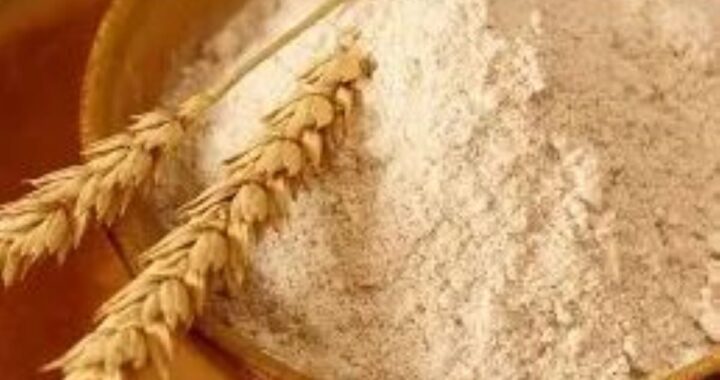
Buying food items in our local markets or neighborhood stores requires extra care these days. Wheat flour is a major staple across Nigerian homes for making bread, puff-puff, meat pies, and family swallow, but unscrupulous vendors sometimes stretch their profits by mixing genuine flour with cheap, heavy bulking agents.
Two common foreign materials used in adulterating flour are chalk powder (calcium carbonate) and gypsum powder (calcium sulfate).
These white powders blend easily with flour at first glance, but consuming them routinely can trigger stomach aches, chronic indigestion, kidney stones, and severe bowel problems.
In this article, Tribune Online examines straightforward, practical ways you can screen your flour for chalk and gypsum right in your kitchen before cooking.
What You Need For The Home Tests
You do not need expensive laboratory equipment to check your flour. Everything required is already sitting on your kitchen shelf or can be bought cheaply at a local chemist.
To carry out these tests, you only need a clear glass of tap water, a small quantity of household vinegar or lemon juice, a clean spoon, your bare hands, and a sample of the wheat flour you want to test.
For all breaking news and latest gist:
👉 JOIN GISTSMATE WHATSAPP CHANNELThe Water Dissolution Test
The water test is the easiest way to expose insoluble minerals hiding inside your grain flour. Wheat flour consists mainly of starch and protein, which float, slowly hydrate, and remain suspended for some time, whereas chalk and gypsum are significantly heavier and behave differently in water.
To perform this test, take a transparent glass cup and fill it halfway with room-temperature water. Add one teaspoon of your wheat flour into the water, stir the mixture vigorously for thirty seconds, and leave it completely undisturbed on a flat table for ten minutes.
If your flour is unadulterated, the liquid will turn uniformly milky or cloudy, and only fine, soft starch sediments will settle slowly at the bottom.
If the flour contains chalk or gypsum, you will notice dense, heavy particles separating almost immediately and sinking rapidly to the base of the cup, forming a gritty white sludge at the bottom while leaving the water above relatively thin.
The Acid Fizz Test
The acid test is a direct chemical reaction method endorsed by food safety bodies, including guidelines from the Food Safety and Standards Authority of India (FSSAI) in their Detect Adulteration with Rapid Test (DART) handbook, which guides consumers on unmasking chalk in staples.
Chalk powder consists of calcium carbonate. When calcium carbonate comes into contact with an acid, such as ordinary table vinegar or lime juice, it immediately produces carbon dioxide gas in the form of visible bubbles and fizzing.
To perform the test, scoop one tablespoon of flour into a clean, dry saucer. Pour one or two teaspoons of white vinegar or fresh lemon juice directly over the flour and observe the surface carefully.
Pure wheat flour does not produce fizzing or effervescence when wet with mild acid; it simply absorbs the liquid and forms a thick, damp paste.
If you notice active foaming, bubbling, or a sizzling sound the moment the vinegar touches the sample, chalk powder has been added to increase the weight.
The Touch And Texture Test
Another quick check you can do directly at the market stall involves using the sensitivity of your fingers to read the grain texture.
Rub a pinch of dry flour between your thumb and index finger. Pure whole wheat or all-purpose flour has a soft, slightly coarse, naturally organic feel with a touch of elasticity when gently pressed.
Chalk and plaster gypsum feel unnaturally silky, dusty, and slippery when dry, resembling blackboard dust or baby powder. When you add a few drops of water to a gypsum-heavy sample and rub it between your fingers, it quickly feels gritty, stiff, and pasty as the gypsum begins absorbing water and setting.
How To Protect Your Household From Counterfeit Food
Consuming gypsum and chalk repeatedly puts unnecessary stress on the digestive organs, as the human stomach cannot break down commercial mineral fillers.
When shopping, be wary of wheat flour sold at prices far below prevailing market rates, as deep discounts often mask bulk adulteration. Buying sealed bags from established, verifiable millers registered with food safety regulators offers an added layer of safety against open-sack market tampering.
For more technical breakdowns and home safety verification guides on everyday pantry staples, you can consult the official consumer resource library at the Food Safety and Standards Authority of India (FSSAI).
WARNING: If You Are Not 18+, Don’t Click The Link Below 👇🫣
https://nya5.com/link?z=11857196&var=
Did you want to monetize your website, join MONETAG or ADSKEEPER and start earning
Please don’t forget to “Allow the notification” so you will be the first to get our gist when we publish it.
Drop your comment in the section below, and don’t forget to share the post.
Never Miss A Single News Or Gist, Kindly Join Us On WhatsApp Channel:
https://whatsapp.com/channel/0029Vad8g81Eawdsio6INn3B
Telegram Channel:
https://t.me/gistsmateNG