
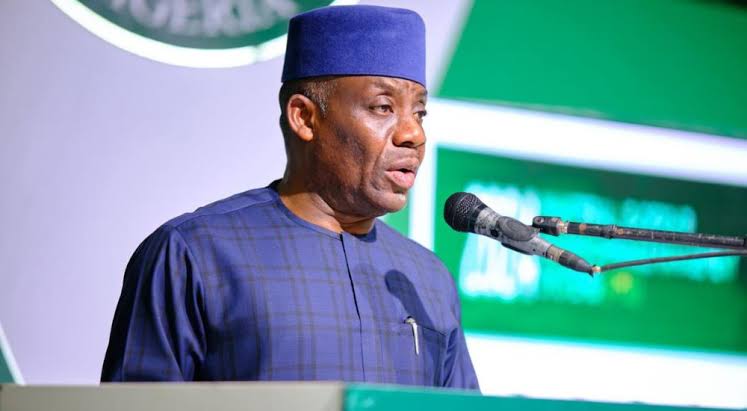
The Federal Government has announced plans to deploy a national digital platform aimed at addressing longstanding challenges associated with fragmented education data, in what officials described as a major step towards improving planning, policymaking and service delivery across Nigeria’s education sector.
The platform, known as the Digital National Education Management Information System, will be officially unveiled on Wednesday alongside the launch of the Public DNEMIS Portal and the inauguration of DNEMIS State Implementation Teams.
Speaking during a pre-event media briefing in Abuja on Monday, the National Project Coordinator of the Special Programmes Operations and Implementation Unit in the Office of the Minister of Education, Mr Adebayo Onigbanjo, said the initiative was designed to tackle years of weak and inconsistent education data that have limited effective governance of the sector.
He said, “For many years, education planning and administration relied on fragmented systems, inconsistent reporting structures and limited access to reliable and timely data. These challenges constrained effective planning, weakened accountability and limited the sector’s ability to respond to emerging realities.”
According to him, the Federal Ministry of Education developed the Nigeria Education Data Infrastructure as a national framework to coordinate, standardise and strengthen education data management across all levels of education.
“At the centre of this transformation is DNEMIS, a flagship component of NEDI and a major milestone in Nigeria’s journey toward a modern, integrated and digitally enabled education management system,” Onigbanjo said.
For all breaking news and latest gist:
👉 JOIN GISTSMATE WHATSAPP CHANNELHe explained that the platform would provide timely, reliable and accessible data to support planning, budgeting, policymaking, monitoring and service delivery, while ensuring that every learner, teacher, school and public investment in education is captured within a unified national database.
Onigbanjo stressed that the reform reflects the Federal Government’s commitment to ensuring that education policies are driven by evidence rather than estimates.
“The progress recorded through NEDI and the implementation of DNEMIS reflects the Ministry’s broader commitment to ensuring that reforms are not only announced, but effectively coordinated, implemented and measured,” he said.
He added, “Data is no longer a back-office function. It is becoming the engine of education reform in Nigeria.”
Also speaking, the Special Assistant to the Minister of Education on Digital Communications and E-Learning, Miss Mojoyin Adebajo, said DNEMIS was developed on the globally recognised District Health Information Software 2 (DHIS2) platform to modernise education administration and strengthen evidence-based decision-making.
She explained that the platform would digitise the Annual School Census, replacing largely manual data collection processes with a more integrated digital system.
“By digitising the Annual School Census process, the platform will provide government with timely, reliable and accessible education data to support planning, budgeting, policymaking and improved service delivery across Nigeria’s education system,” she said.
Adebajo noted that the platform would enable government to generate up-to-date information on schools, learners, teachers and education infrastructure, leading to better resource allocation and improved monitoring of education programmes.
She also highlighted the Public DNEMIS Portal as a key feature of the initiative, saying it would, for the first time, make selected official education data publicly accessible to researchers, journalists, development partners, civil society organisations, policymakers and the general public.
According to her, “This represents an important step toward expanding access to information and encouraging broader participation in conversations that shape the future of education in Nigeria.”
The officials also acknowledged the technical support provided by the United Nations Children’s Fund and the University of Oslo in developing the initiative.
Nigeria’s education sector has long struggled with weak and fragmented data systems, with information on schools, teachers, enrolment and infrastructure often collected through manual processes and disparate reporting mechanisms. The inconsistencies have complicated planning, budgeting, teacher deployment, infrastructure development and monitoring of education outcomes, while limiting the government’s ability to make timely, evidence-based decisions.
Education experts have repeatedly called for an integrated national education database to improve transparency, accountability and coordination across federal and state institutions.
The introduction of DNEMIS, a core component of the Nigeria Education Data Infrastructure, is expected to address these gaps by digitising data collection, including the Annual School Census, and providing real-time information to support education reforms under the Nigeria Education Sector Renewal Initiative led by the Minister of Education, Dr Maruf Tunji Alausa.
WARNING: If You Are Not 18+, Don’t Click The Link Below 👇🫣
Did you want to monetize your website, join MONETAG or ADSKEEPER and start earning
Please don’t forget to “Allow the notification” so you will be the first to get our gist when we publish it.
Drop your comment in the section below, and don’t forget to share the post.
Never Miss A Single News Or Gist, Kindly Join Us On WhatsApp Channel:
https://whatsapp.com/channel/0029Vad8g81Eawdsio6INn3B
Telegram Channel:
https://t.me/gistsmateNG