
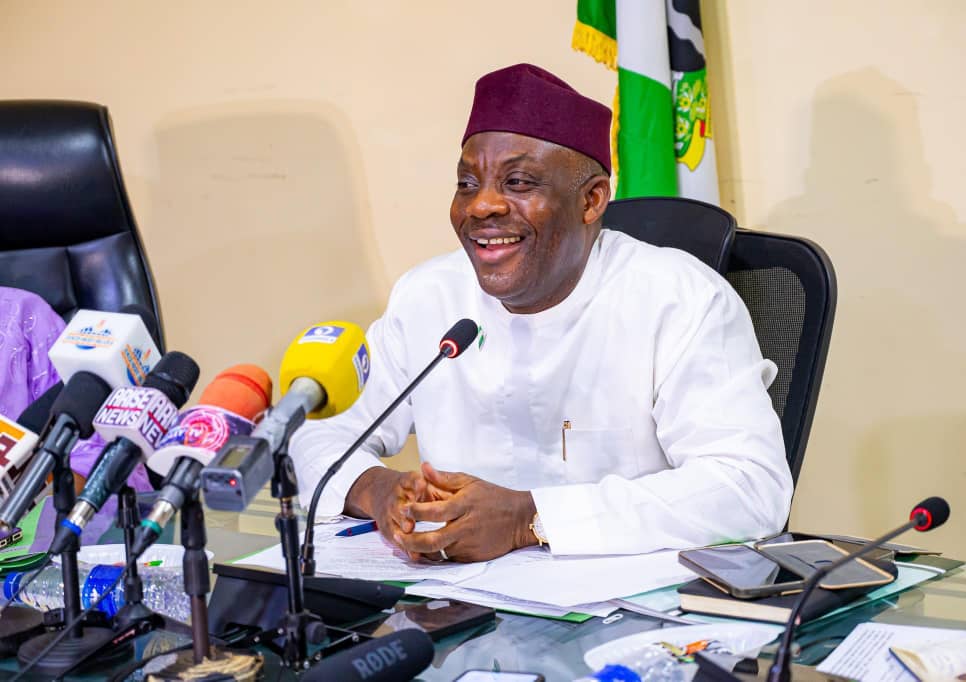
The Federal Government has unveiled the 2026 agreements with unions representing academic and non-academic staff of universities, polytechnics and colleges of education, urging them to embrace dialogue and avoid industrial actions that could disrupt academic activities.
Minister of Education, Dr Olatunji Alausa, made the appeal on Tuesday in Abuja during the unveiling of the agreements between the Federal Government and the staff unions in tertiary institutions.
The agreements cover the Consolidated Academic Tools Allowance (CATA) for the Academic Staff Union of Polytechnics (ASUP) and the Colleges of Education Academic Staff Union (COEASU), as well as the Consolidated Non-Teaching Tools Allowance (CONTTA) for eligible non-teaching staff across universities, polytechnics and colleges of education.
The allowances take effect from January 1, 2026, in accordance with the agreements and applicable implementation guidelines.
Other unions involved in the exercise include the Senior Staff Association of Nigerian Universities (SSANU), the Non-Academic Staff Union of Educational and Associated Institutions (NASU), the Nigerian Association of Academic Technologists (NAAT), the Senior Staff Association of Nigeria Polytechnics (SSANIP), the Non-Teaching Staff Union of Polytechnics (NOTSUP) and the Senior Staff Union in Colleges of Education, Nigeria (SSUCOEN).
Alausa said the agreements represented a significant step towards improving workers’ welfare, restoring trust between the government and unions, and ensuring stability in the nation’s tertiary education system.
For all breaking news and latest gist:
👉 JOIN GISTSMATE WHATSAPP CHANNELHe acknowledged that previous agreements between the government and staff unions had suffered delays and incomplete implementation, resulting in recurring disputes and prolonged strikes that disrupted academic calendars.
According to him, the disruptions had forced students to spend additional months or years completing their programmes, while families faced increased costs and uncertainty.
The minister said the agreements reflected President Bola Tinubu’s commitment to ensuring that students completed their four-year programmes within four years.
He said, “Today, through his leadership, these agreements give practical expression to that pledge: A promise made, a promise kept, and trust restored.”
Alausa assured the unions that the Federal Government would honour its obligations under the agreements, stressing that successful implementation would be crucial to sustaining confidence in the negotiation process.
He explained that the allowances were designed to support the professional and operational needs of eligible personnel, adding that staff welfare, motivation and conducive working environments were essential to improving the quality of tertiary education.
To strengthen implementation and monitoring, the minister disclosed that the Federal Government had decided to expand the existing Implementation and Monitoring Committee (IMC) for the agreement with the Academic Staff Union of Universities (ASUU) into a single committee responsible for monitoring agreements with academic and non-academic staff unions across tertiary institutions.
Recall that the Federal Government had in January this year unveiled similar FGN-ASUU agreement with the Academic Staff Union of Universities.
Alausa said the expanded committee would include representatives of the relevant unions and stakeholders to monitor agreed milestones, assess progress, address implementation challenges and ensure accountability.
He urged government agencies, governing councils and institutional management to comply with the implementation guidelines and cooperate with the committee.
He also called on union leaders to keep their members informed and channel emerging concerns through established mechanisms rather than resorting to industrial action.
“Industrial harmony is essential to educational excellence. It gives institutions the certainty to plan, supports uninterrupted research and allows students to concentrate on their studies,” he said.
The minister commended the unions for their participation in the negotiations and acknowledged the contributions of government officials and the Federal Government Tertiary Institutions Expanded Negotiation Committee, chaired by Malam Yayale Ahmed.
Earlier, the Chairman of the Federal Government Tertiary Institutions Expanded Negotiation Committee, Yayale Ahmed, urged the unions to reciprocate the government’s commitment by allowing the implementation process to proceed without threats of industrial action.
Ahmed, a former Head of the Civil Service of the Federation, described the agreements as the beginning of another phase of engagement, noting that their success would depend on the willingness of both parties to fulfil their obligations.
He said the negotiations had been challenging but were concluded through mutual respect, collective bargaining and concessions by the government and the unions.
“The most important thing is for us to have a seamless agreement collectively, and that the government is not only willing but comfortable with ensuring implementation to the letter,” he said.
Ahmed, however, disclosed that discrepancies had been identified in some aspects of the agreements, adding that the Minister of Education and the relevant wages commission had indicated their willingness to review them to prevent any union from feeling unfairly treated.
He appealed to the unions to exercise patience while the government addressed outstanding issues, warning against threats of indefinite strikes over unresolved payments.
Also speaking, the National President of SSANU, Muhammed Ibrahim, commended the Federal Government for what he described as progress in addressing workers’ demands, saying recent payments had renewed optimism among university employees.
Ibrahim praised Alausa for engaging union leaders and intervening in outstanding salary-related issues, noting that the development had generated excitement among workers.
He, however, urged the Ministry of Education to ensure that unions whose agreements were yet to be formally processed received the necessary documentation without further delay.
According to him, outstanding agreements and circulars had created tension among affected workers, making their prompt release necessary to consolidate the gains of the negotiations.
He assured the government of the unions’ readiness to contribute to national development, adding that addressing the concerns of tertiary institution workers would help resolve some of the broader challenges facing the country.
In his goodwill message, the National President of COEASU, Comrade Lawal Bazza, described the agreement as a significant departure from previous approaches to resolving disputes in the education sector.
Bazza commended the Minister of Education and the negotiation team, saying the calibre and experience of the committee members helped reduce mutual suspicion and build confidence among the negotiating parties.
He disclosed that COEASU had achieved more than 70 per cent implementation of the agreement, even before the formal inauguration of the implementation committee.
“For us at the implementation structure, even without the inauguration of the implementation committee, I can tell you, as at today, we have achieved over 70 per cent of the agreement that has been signed with the Federal Government,” he said.
He expressed optimism that the outstanding provisions would be implemented with the support of the expanded monitoring committee.
Bazza also called for the full implementation of agreements reached with other unions, stressing that the negotiations involved issues beyond financial benefits.
He said the successful implementation of the agreements would strengthen confidence in collective bargaining and demonstrate that commitments made by the government could translate into tangible improvements in workers’ welfare.
The unions observed that the unveiling of the agreements marks another phase in efforts to resolve longstanding disputes between the Federal Government and tertiary institution unions over workers’ welfare, allowances and conditions of service.
The implementation of the agreements is expected to test the government’s commitment to its undertakings and the willingness of the unions to sustain industrial harmony across the country’s universities, polytechnics and colleges of education.
WARNING: If You Are Not 18+, Don’t Click The Link Below 👇🫣
https://nya5.com/link?z=11857196&var=
Did you want to monetize your website, join MONETAG or ADSKEEPER and start earning
Please don’t forget to “Allow the notification” so you will be the first to get our gist when we publish it.
Drop your comment in the section below, and don’t forget to share the post.
Never Miss A Single News Or Gist, Kindly Join Us On WhatsApp Channel:
https://whatsapp.com/channel/0029Vad8g81Eawdsio6INn3B
Telegram Channel:
https://t.me/gistsmateNG