
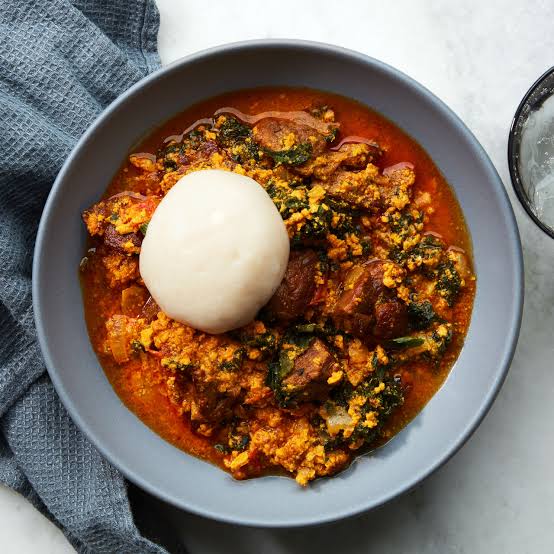
For Mrs. Alele Hamzat, a mother of four, the daily ritual of preparing breakfast has shifted from a routine household task into a stressful mathematical equation.
Few years ago, her family routinely enjoyed a morning meal consisting of fried eggs, tea with milk, and sliced bread. Today, that balanced plate is a distant memory.
“We have forgotten about eggs and milk.
“Now, breakfast is plain boiled yam or cassava flakes (garri) soaked in water.
“We only eat to survive, not to balance any diet.”
Mrs. Hamzat is far from being alone.
Economy&Lifestyle discovered that across Nigeria, a severe economic crisis characterized by high inflation, currency depreciation, and the removal of fuel subsidy has triggered a drastic shift in how millions of citizens eat.
As food prices, especially rice, continue to climb, a quiet transition is taking place on the plates of both low-income and middle-class households. Nutritional variety is rapidly diminishing, replaced by cheap, single-carbohydrate alternatives aimed strictly at staving off hunger rather than maintaining health.
Even those selling cooked food who sell a bag of rice within a week can hardly sell three mudus a week.
Recent reports from the National Bureau of Statistics (NBS) indicate that roughly 65.8 percent of Nigerian households are unable to afford healthy, nutritious, or preferred foods due to a lack of funds.
Compounding this grim picture, data from the United Nations, UN, reveals that a staggering 80 percent of the population cannot afford a healthy diet, pointing to structural flaws within the national food system.
With food inflation squeezing household wallets, families are forced into extreme adjustments.
Staples that once anchored the Nigerian diet, such as beans, rice, and fresh vegetables, have surged in cost.
Mrs. Dorathy Agbede, a restaurant owner, said: “Before, I sell a bag of rice (50kg) and half bag (50kg) of beans in a week.
“People even offer to buy vegetable soup mixed with assorted beef alongside.
“But today, I hardly sell two mudu of beans or rice in a week.
“Most times I give cooked food out to avoid it being wasted.
“Many customers are owing me. Some who eat breakfast and lunch now eat only lunch.”
Consequently, the traditional “three square meals” model has dissolved.
Many families have adopted coping mechanisms like the “0-1-1” or “1-0-1” formula; skipping breakfast or lunch entirely not to stretch their meager resources.
Dangerous Shift To Ultra-processed Alternatives
Dietitians are raising the alarm over what they describe as a forced transition to unhealthy eating patterns.
To maximize calorie intake on a tight budget, many urban residents are abandoning fresh foods for highly processed, low-cost alternatives.
Open-air markets have seen an increase in the patronage of cheap instant noodles, heavily salted bouillon cubes, and low-grade vegetable oils.
“What we are seeing is a dangerous pivot”, said Dr. Charles Alozie, a clinical nutritionist.
“People cannot afford fresh fish, beef, or leafy vegetables.
“They buy heavy starches to stay full.
“They are filling their stomachs with empty calories, high sodium, and bad fats, which is a recipe for a future medical disaster.”
Medical experts warned that this forced dietary shift is fueling a double burden of malnutrition. While undernutrition and stunting remain acute in vulnerable regions, urban areas are seeing an uptick in diet-related non-communicable diseases, such as hypertension, type-2 diabetes, and cardiovascular complications, driven by poor food quality.
The burden of this dietary regression falls heaviest on pregnant women and young children.
According to data tracked by the Global Alliance for Improved Nutrition (GAIN), inadequate nutrient intake during early childhood development risks causing permanent cognitive and physical stunting.
Protein deficiency is now becoming highly visible.
“We used to buy two kilos of beef every week,” said Tunde Adebayo, a civil servant.
“Now, we buy a single fish, break it into tiny pieces, and use it just to add aroma to the soup.
“The children don’t get actual pieces of meat anymore.”
Experts urge policies focused on lowering the cost of agricultural inputs, improving rural transportation infrastructure, and securing farmlands to drive down food inflation.
Until these broader economic corrections filter down to local markets, ordinary citizens are left to navigate the reality of shrinking plates.
For millions of Nigerians, the challenge is no longer about maintaining a balanced diet, but ensuring there is something to eat when the sun goes down.
Credit: Vanguard News
WARNING: If You Are Not 18+, Don’t Click The Link Below 👇🫣
Did you want to monetize your website, join MONETAG or ADSKEEPER and start earning
Please don’t forget to “Allow the notification” so you will be the first to get our gist when we publish it.
Drop your comment in the section below, and don’t forget to share the post.
Never Miss A Single News Or Gist, Kindly Join Us On WhatsApp Channel:
https://whatsapp.com/channel/0029Vad8g81Eawdsio6INn3B
Telegram Channel:
https://t.me/gistsmateNG