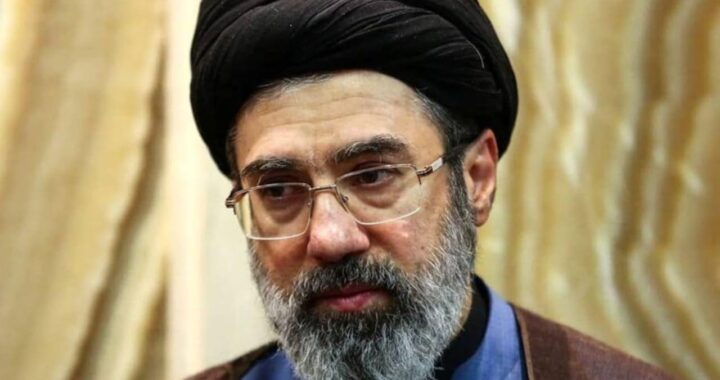
As Iran weighs its next supreme leader, Mojtaba Khamenei has emerged at the centre of intense political and clerical calculations, with reports describing him as a leading contender to succeed his late father, Ali Khamenei.
According to The New York Times, which cited Iranian officials familiar with internal deliberations, the influential Assembly of Experts has begun discussions on succession, with Mojtaba widely viewed as a front-runner.
A formal announcement, however, remains pending amid concerns over security and political sensitivities.
Born in 1969 in Mashhad, Mojtaba grew up during a turbulent era marked by revolution and war.
As a young man, he reportedly fought in the Iran-Iraq war, an experience that shaped many figures within Iran’s ruling elite.
Unlike several senior clerics who have ascended to high office, Mojtaba is not considered a marja, or top-ranking religious authority, and has never held an elected or formal government position.
Despite the absence of an official title, he is widely believed to wield significant influence behind the scenes.
Analysts and Western officials have long pointed to his close ties with the Islamic Revolutionary Guard Corps (IRGC), the powerful military and political force that plays a central role in Iran’s security and regional strategy.
Over the years, he has reportedly been involved in managing aspects of his father’s office, strengthening his reach within the system.
In 2019, the United States imposed sanctions on Mojtaba, alleging that he acted on behalf of the supreme leader in an official capacity without holding a formal position — a move that further elevated his international profile.
His possible elevation carries deep symbolic and political implications. Iran’s post-revolutionary system has consistently rejected monarchy and hereditary rule, positioning itself as a republic guided by Islamic jurisprudence.
A father-to-son succession would therefore mark a historic shift, raising questions about dynastic politics within a system that formally opposes it.
Supporters may view Mojtaba as a stabilising figure capable of ensuring continuity at a time of regional tensions and domestic uncertainty.
Critics, however, argue that his rise could signal the consolidation of power by hardline factions aligned with the Revolutionary Guard.
Ultimately, the decision rests with the Assembly of Experts, the 88-member clerical body constitutionally mandated to appoint and oversee the supreme leader. If selected, Mojtaba Khamenei would become only the second leader chosen in the Islamic Republic’s history — and one whose ascent would redefine the trajectory of Iran’s political order.
WARNING: If You Are Not 18+, Don’t Click The Link Below 👇🫣
https://emitprocured.com/u36k6hvh?key=9d5a995551042f49ca200d04746b52ad
Did you want to monetize your website, join MONETAG or ADSKEEPER and start earning
Please don’t forget to “Allow the notification” so you will be the first to get our gist when we publish it.
Drop your comment in the section below, and don’t forget to share the post.
Never Miss A Single News Or Gist, Kindly Join Us On WhatsApp Channel:
https://whatsapp.com/channel/0029Vad8g81Eawdsio6INn3B
Telegram Channel:
https://t.me/gistsmateNG