
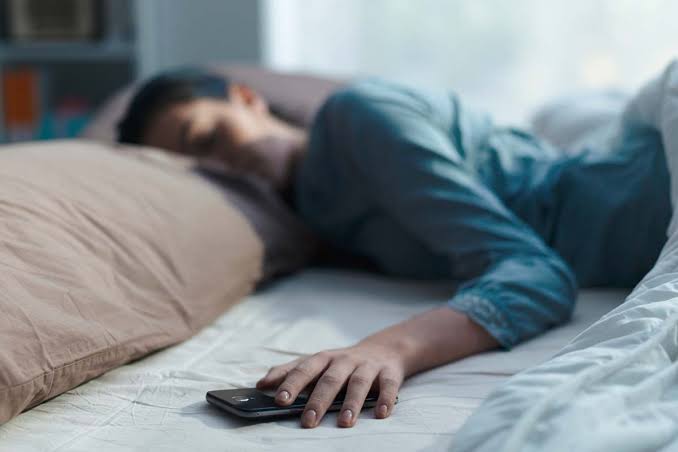
Sleeping without pillows may help lower high internal eye pressure, the build-up of which causes optic nerve damage and glaucoma, the leading cause of irreversible blindness worldwide among people with the condition, suggests preliminary research.
Writing in the ‘British Journal of Ophthalmology’, experts explained that stacked pillows alter neck position, which may compress the jugular vein and prevent the natural drainage of aqueous humour.
This fluid nourishes eye tissues without a blood supply, such as the cornea and lens, and helps maintain eye shape and pressure.
Internal eye pressure, formally known as intraocular pressure (IOP), fluctuates in response to changes in body posture. According to the researchers, the transition from an upright position to a supine one—lying horizontally on the back with the face, chest, and abdomen facing upward—during sleep is the primary contributor to its increase at night.
To explore this further, they examined the effects of sleeping with two regular-sized pillows, providing a head elevation of 20–35°, in 144 adults with glaucoma. Of these, 84 were aged up to 44, 41 were aged 45 to 59, and 19 were aged 60 and above.
Seventy participants had normal tension glaucoma; nine had ocular hypertension (high eye pressure); and 65 had primary open-angle glaucoma—the most common and slowly progressive form of the condition, often caused by impaired drainage of aqueous humour.
Between October 2023 and April 2024, participants provided detailed information on their medical history, including glaucoma treatment, as well as smoking and alcohol consumption. They also underwent a comprehensive eye examination.
IOP in the right eye was measured every two hours over 24 hours, both while sitting and lying down. When supine, participants’ heads were raised to an elevation of 20–35° using two normal-sized pillows, and IOP was measured again after 10 minutes.
They then returned to sleeping flat on their backs until the next measurement. Four complete sets of measurements were obtained for each participant, both with and without pillows.
The researchers reported that 96 participants (67%) showed a measurable increase in IOP when transitioning from a flat supine position to an elevated one, with an average rise of 1.61 mm Hg.
Overall, internal eye pressure was significantly higher in the elevated position (17.42 mm Hg versus 16.62 mm Hg), with greater fluctuations observed over the 24 hours.
At the same time, ocular perfusion pressure (OPP), which reflects the pressure available to push blood through the eye’s tiny vessels, was significantly reduced when two pillows were used. Reduced OPP indicates diminished blood flow, which can limit the delivery of oxygen and nutrients to the eye.
The researchers noted that traditional strategies for managing nocturnal IOP are largely limited to increasing the type or frequency of pressure-lowering medications or using supplementary laser therapy.
They emphasised that further research is needed to confirm these preliminary findings, adding that “such behavioural adjustments represent a simple yet potentially effective adjunctive strategy for optimising long-term IOP management in clinical practice.”
WARNING: If You Are Not 18+, Don’t Click The Link Below 👇🫣
https://troubleduseful.com/u36k6hvh?key=9d5a995551042f49ca200d04746b52ad
Please don’t forget to “Allow the notification” so you will be the first to get our gist when we publish it.
Drop your comment in the section below, and don’t forget to share the post.
Never Miss A Single News Or Gist, Kindly Join Us On WhatsApp Channel:
https://whatsapp.com/channel/0029Vad8g81Eawdsio6INn3B
Telegram Channel:
https://t.me/gistsmateNG