
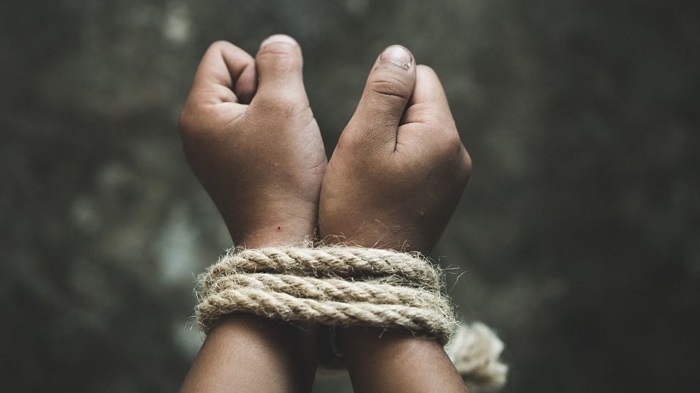
No fewer than 279 persons were kidnapped across Nigeria in May 2026, even as the country recorded 156 violent incidents that resulted in 842 deaths,
The figure is contained in new data from Nextier’s Nigeria Violent Conflicts Database, according to a statement made available on Sunday.
The figures indicate a rise in insecurity, with violent incidents “by 51.5 per cent, casualties increasing by 90.1 per cent, and kidnap victims climbing by 19.7 per cent compared to May 2025.”
The data comes amid growing concerns that Nigeria’s peacebuilding efforts are not yielding measurable results despite significant investments by governments and development partners.
In a new policy article titled “The Travails of Measuring Peacebuilding in Fragile Contexts,” development practitioner and research professional at Nextier Jamilu Musa and Dr. Chukwuma Okoli, visiting Lead for Research and Policy at Nextier and a Political Science lecturer at Nnamdi Azikiwe University, Awka, warned that weak impact assessment frameworks are undermining the effectiveness of interventions.
According to the experts, while governments and local communities continue to invest in peacebuilding programmes, assessing whether these interventions are reducing conflict remains a major challenge.
Follow us for breaking news:
👉 JOIN WHATSAPP CHANNELThey noted that peacebuilding goes beyond implementing dialogue sessions, workshops, and awareness campaigns, stressing that the real measure of success lies in whether such interventions reduce violence, improve trust, strengthen resilience, and foster social cohesion.
Musa and Okoli argued that with shrinking international funding for peacebuilding, measuring impact has become more important than ever.
They attributed the funding pressure partly to competing global crises, including the prolonged Russo-Ukrainian War and tensions in the Middle East, which have diverted donor attention and resources.
The experts also said shifting global economic priorities, including protectionist policies under US President Donald Trump’s economic nationalism, have reduced support for peacebuilding initiatives in countries such as Nigeria.
However, they noted that measuring peacebuilding outcomes is far more difficult than evaluating conventional development projects because many of the indicators—such as trust, resilience, perceptions of safety, and social cohesion—are intangible and cannot be easily quantified.
According to them, four key indicators should guide peacebuilding assessments in fragile contexts: conflict dynamics, social cohesion, governance and inclusion, and resilience/conflict prevention.
“Conflict dynamics, they explained, help track changing patterns of violence such as kidnapping and communal clashes, while social cohesion measures trust and cooperation among communities.
“Governance and inclusion assess public confidence in institutions and participation by women, youths, and vulnerable groups in decision-making, while resilience measures how effectively communities can prevent conflicts from escalating.
“Despite these indicators, the experts said measuring peacebuilding outcomes remains difficult due to multiple obstacles,” the statement read.
The experts identified six major challenges, “attribution bias, short donor funding cycles, rapidly changing conflict realities, difficulty measuring intangible outcomes, poor baseline data, and security constraints affecting data collection in conflict zones.”
“Peace is not static; it is a work in progress involving both reducing conflict and increasing development,” the analysts said.
To address these challenges, they recommended adopting modern evaluation tools such as outcome harvesting, most significant change, conflict-sensitive monitoring, perception surveys, social network analysis, participatory monitoring and evaluation, and mixed-method assessments.
They also urged federal and state governments to institutionalise peace measurement frameworks using standardised indicators on trust, inclusion, resilience and perceptions of security.
The experts further called for stronger collaboration among security agencies, humanitarian actors, development partners and peacebuilding organisations to improve evidence-sharing and reduce duplication.
They concluded that counting activities alone is insufficient, adding that the key question is whether peacebuilding interventions are helping communities become safer, more inclusive and more resilient amid Nigeria’s security challenges.
WARNING: If You Are Not 18+, Don’t Click The Link Below 👇🫣
Did you want to monetize your website, join MONETAG or ADSKEEPER and start earning
Please don’t forget to “Allow the notification” so you will be the first to get our gist when we publish it.
Drop your comment in the section below, and don’t forget to share the post.
Never Miss A Single News Or Gist, Kindly Join Us On WhatsApp Channel:
https://whatsapp.com/channel/0029Vad8g81Eawdsio6INn3B
Telegram Channel:
https://t.me/gistsmateNG