
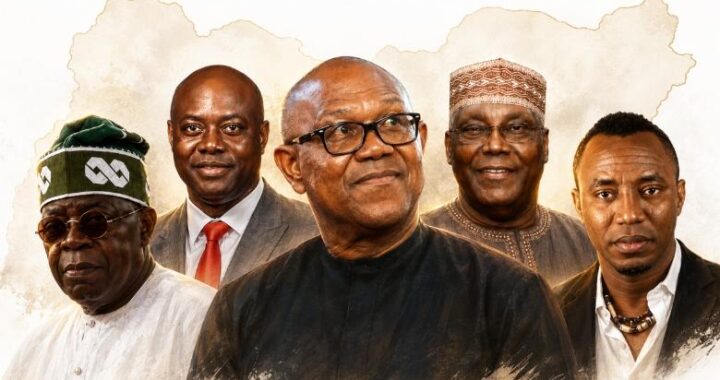
With political activities gradually gathering momentum ahead of the 2027 general election, Nigeria’s political landscape is beginning to take shape as major parties conclude their presidential primaries and candidates emerge through various selection processes.
The Road to Aso Rock
While President Bola Ahmed Tinubu is expected to seek re-election, opposition figures, former officeholders, activists, technocrats and emerging political actors are also positioning themselves for what could be one of the most fiercely contested presidential elections in Nigeria’s democratic history.
The candidates emerged through a mix of direct primaries, indirect primaries, and consensus arrangements, reflecting the diverse internal democratic processes adopted by their respective parties.
Here are 10 politicians whose names are expected to dominate conversations ahead of the 2027 presidential election.
1. Bola Ahmed Tinubu | All Progressives Congress (APC)
President Bola Ahmed Tinubu secured the presidential ticket of the ruling APC through a direct primary conducted by the party.
Follow us for breaking news:
👉 JOIN WHATSAPP CHANNELThe former Lagos governor defeated several contenders to emerge as the party’s candidate and is expected to seek a second term in office.
Since assuming office in May 2023, Tinubu has pursued sweeping economic reforms, including the removal of fuel subsidy and foreign exchange reforms aimed at stabilising the economy.
As the incumbent president and leader of the ruling party, Tinubu enters the race with the advantages of incumbency, an extensive political network, and the backing of a large number of APC governors and elected officials.
2. Peter Obi | Nigeria Democratic Congress (NDC)
Former Anambra governor Peter Obi emerged as the presidential candidate of the Nigeria Democratic Congress (NDC) through a consensus arrangement ratified by party stakeholders and delegates.
Obi’s political influence has continued to grow since his impressive showing in the 2023 election, where he attracted unprecedented support from young voters, professionals, and first-time participants under the OBIdient Movement.
His emergence as the NDC flagbearer has further strengthened his position as one of the leading opposition figures challenging the political establishment ahead of 2027.
3. Atiku Abubakar | African Democratic Congress (ADC)
Former Vice President Atiku Abubakar remains one of the most formidable and experienced politicians in Nigeria’s contemporary political landscape.
Following the formation of a broad opposition coalition ahead of the 2027 elections, Atiku emerged as the presidential candidate of the African Democratic Congress (ADC) through a direct primary election conducted by the party. His victory further cemented his position as one of the leading challengers to President Bola Tinubu’s expected re-election bid.
Having served as Vice President between 1999 and 2007, Atiku has remained a dominant figure in national politics for over three decades. He has contested the presidency multiple times under different political platforms and built one of the most extensive political networks in the country, spanning the North, South, and key interest groups across Nigeria.
His supporters point to his experience in governance, private sector background, and longstanding advocacy for economic liberalisation, restructuring, and fiscal reforms as reasons why he remains a strong contender. They argue that his deep understanding of Nigeria’s political and economic challenges places him in a unique position to offer alternative leadership.
4. Goodluck Jonathan | Peoples Democratic Party (PDP)
Former President Goodluck Jonathan remains one of the most talked-about figures in conversations surrounding the 2027 presidential election, despite not formally declaring an intention to contest.
Jonathan’s name has continued to feature prominently following reports that some stakeholders within the Tanimu Turaki-led faction of the Peoples Democratic Party (PDP) are favourably disposed to the idea of drafting him into the race. However, the former president has neither publicly accepted nor rejected such calls.
Since leaving office in 2015, Jonathan has largely maintained a statesmanlike posture, focusing on peacebuilding initiatives, election observation missions and diplomatic engagements across Africa and beyond. His decision to concede defeat in the 2015 presidential election continues to earn him praise both locally and internationally.
Supporters of a possible Jonathan candidacy argue that his experience as a former president, combined with his relatively moderate political profile, could make him an attractive option in a politically divided country.
5. Omoyele Sowore | African Action Congress (AAC)
Human rights activist and publisher of Sahara Reporters, Omoyele Sowore, secured the AAC presidential ticket through a direct primary involving party members across the country.
Sowore has consistently campaigned on issues such as anti-corruption, youth empowerment, institutional reforms, and government accountability.
Although he remains an outsider to Nigeria’s traditional political establishment, his ability to mobilise young voters and social media audiences continues to make him a significant voice in the political space.
6. Seyi Makinde | Allied Peoples Movement (APM)
Oyo Governor Seyi Makinde emerged as the presidential candidate of the APM through a consensus arrangement after receiving endorsements from key party stakeholders.
Makinde has built a reputation for infrastructure development, education reforms, and prudent fiscal management in Oyo.
His growing national profile and appeal across political divides have made him one of the most closely watched politicians ahead of the election.
7. Adewole Adebayo | Social Democratic Party (SDP)
Lawyer and businessman Adewole Adebayo retained the SDP presidential ticket through an indirect primary election conducted by delegates.
Adebayo, who represented the party in the 2023 presidential election, has continued to advocate economic reforms, constitutional restructuring and good governance.
His articulate policy positions and grassroots engagements have helped him maintain relevance within Nigeria’s evolving political landscape.
8. Donald Duke | Peoples Redemption Party (PRP)
Former Cross River governor Donald Duke emerged as the presidential candidate of the PRP through a delegate-based indirect primary.
Duke remains widely respected for his tenure as governor, during which he pursued tourism development, infrastructure expansion, and public sector reforms.
His technocratic approach to governance continues to resonate with voters seeking alternatives to traditional political structures.
9. Gbenga Olawepo-Hashim | Accord (A)
Businessman and politician Gbenga Olawepo-Hashim emerged as the presidential candidate of Accord through a consensus arrangement endorsed by party leaders.
Olawepo-Hashim has remained active in national politics through advocacy on economic development, national unity, and private sector-led growth.
His supporters believe his extensive experience in business and public affairs positions him as a credible choice in the race.
10. Anita Zugwai-Chukwu | Young Progressives Party (YPP)
Anita Zugwai-Chukwu has emerged as one of the surprise names in the build-up to the 2027 presidential election after securing the presidential ticket of YPP.
Unlike many of her counterparts who faced competitive primary contests, Zugwai-Chukwu emerged as the sole presidential aspirant of the party and was subsequently affirmed as the YPP’s presidential candidate by party delegates and stakeholders.
Her emergence marks a significant milestone for women in Nigerian politics, placing her among a small number of female politicians who have secured presidential tickets in the country’s democratic history.
The Issues That Could Shape 2027
Beyond personalities and party affiliations, the 2027 election is expected to revolve around critical national concerns, including economic recovery, inflation, insecurity, unemployment, education, healthcare, infrastructure, and national unity.
The election could also witness the emergence of broad coalitions as opposition parties seek to challenge the ruling APC’s dominance.
Regional considerations, zoning arrangements, religious balancing, and voter turnout among young Nigerians are also expected to play significant roles in determining the eventual outcome.
The Road To Aso Rock
Although the official campaign season has yet to commence, the battle for Nigeria’s highest office is already taking shape.
With former presidents, sitting governors, opposition leaders, activists and technocrats now positioning themselves, the 2027 presidential election is shaping up to be a contest defined not only by personalities but also by competing visions for Nigeria’s future.
As consultations intensify and alliances continue to evolve, Nigerians will be watching closely to see which of these contenders can successfully translate political ambition into electoral victory.
Credit: Tribune Online
WARNING: If You Are Not 18+, Don’t Click The Link Below 👇🫣
Did you want to monetize your website, join MONETAG or ADSKEEPER and start earning
Please don’t forget to “Allow the notification” so you will be the first to get our gist when we publish it.
Drop your comment in the section below, and don’t forget to share the post.
Never Miss A Single News Or Gist, Kindly Join Us On WhatsApp Channel:
https://whatsapp.com/channel/0029Vad8g81Eawdsio6INn3B
Telegram Channel:
https://t.me/gistsmateNG