The United States and Iran agreed to a two-week ceasefire on Tuesday, barely an hour before a deadline set by President Donald Trump for devastating strikes on Iranian infrastructure was set to expire.
The ceasefire has brought to an end, at least temporarily, a war that has killed thousands of people across the Middle East since it began on 28 February.
The war started after the United States and Israel launched coordinated strikes that triggered a sweeping Iranian retaliation.
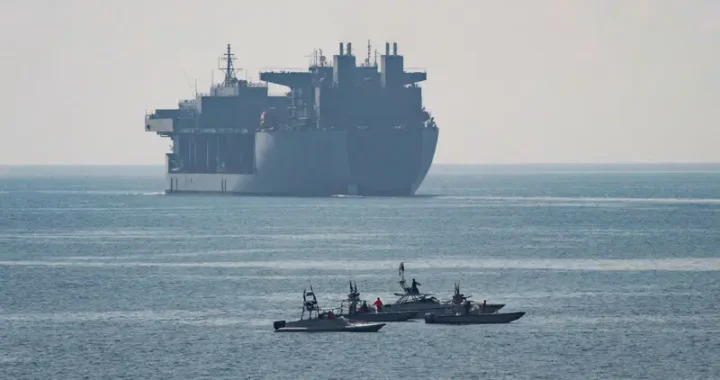
The ceasefire, brokered through Pakistani mediation, includes a temporary reopening of the Strait of Hormuz, one of the world’s most critical oil and gas transit routes, which Iran had blockaded since the start of hostilities.
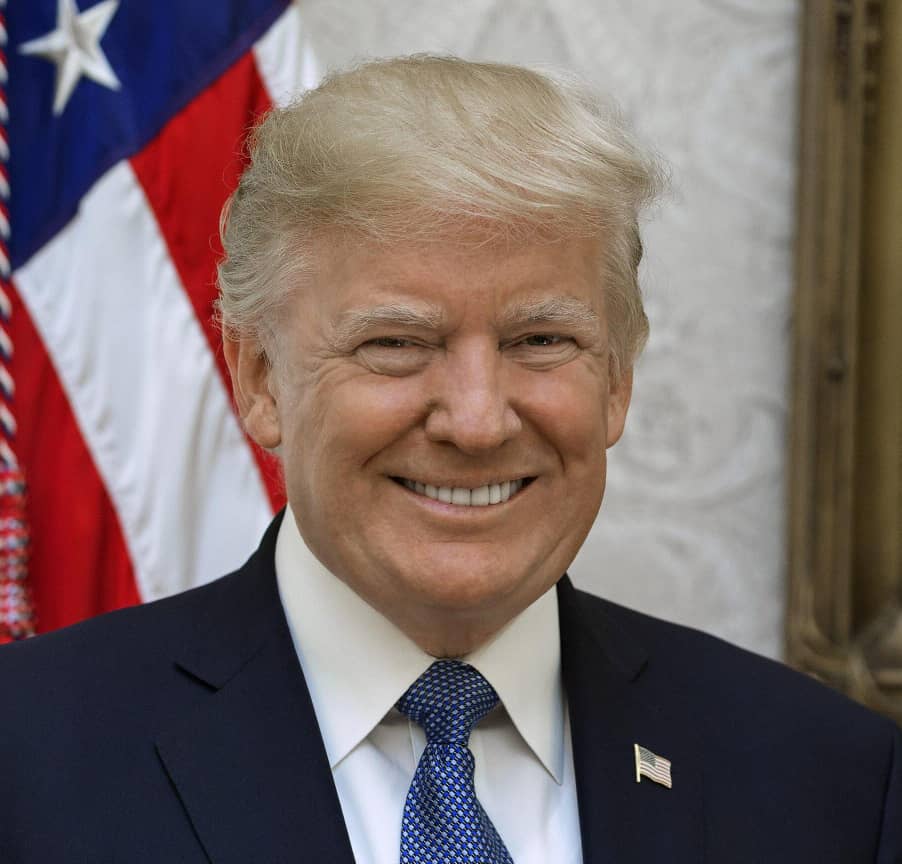
Mr Trump announced the deal hours after issuing one of the most extreme threats of his presidency, warning on his Truth Social platform that “a whole civilisation will die tonight, never to be brought back again” if Iran did not comply with his demands.
Trump’s Ultimatum And The last-minute Deal
Earlier on Tuesday, as United States forces struck military targets near Iran’s main oil export hub, Mr Trump escalated pressure on Tehran to fully reopen the strait or face “devastating strikes on critical infrastructure within hours.”
“We will find out tonight,” he wrote, “one of the most important moments in the long and complex history of the World.” He expressed hope that “something revolutionarily wonderful can happen” to forestall further attacks.
Iran’s Islamic Revolutionary Guard Corps (IRGC) responded by threatening to retaliate beyond the region and deprive the US and its allies of oil and gas “for many years” if Washington crossed what it called “red lines” by attacking civilian infrastructure.
Hours later, the ceasefire was announced.
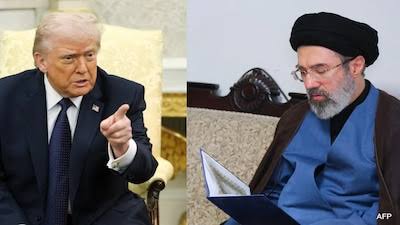
Mr Trump said he had received a 10-point proposal from Iran, which he described as a “workable basis” for negotiations. He said he expected a final agreement to be “finalised and consummated” within the two-week window, and confirmed the deal was contingent on Iran pausing its blockade of oil and gas shipments through the Strait of Hormuz.
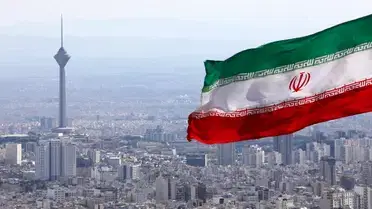
Iran’s Foreign Minister, Abbas Araqchi, said in a statement that Tehran would halt counter-attacks and guarantee safe passage through the strait. He noted, however, that the passage would operate in coordination with the Iranian military.
What is in Iran’s 10-point plan?
According to Iranian state media, Tehran will only accept a permanent conclusion to the war once the terms of a 10-point peace plan transmitted to the White House through Pakistani intermediaries are fully agreed upon.
The 10-point proposal by Iran was in response to a 15-point proposal by the US; both through Pakistani intermediaries.
The details of the proposal have not been made public, but Iranian media have reported on what is believed to be the content.
The conditions published by Iranian state media include: the lifting of all primary and secondary sanctions on Iran; continued Iranian control over the Strait of Hormuz; a full withdrawal of US military forces from the Middle East; an end to all attacks on Iran and its allies; the release of frozen Iranian assets; and the adoption of a United Nations Security Council resolution making any final deal binding under international law.
The proposal also reportedly contains a plan for Iran to give up its highly enriched uranium, stop enriching uranium beyond 2.5 per cent needed for civilian energy and allow for inspection of its facilities by the International Atomic Energy Agency.
The plan also reportedly allows Iran and Oman to charge a transit fee of up to $2 million per vessel passing through the Strait of Hormuz, with the revenue earmarked for post-war reconstruction.
If peace negotiations collapse, Tehran said it reserved the right to close the strait again.
Mr Trump declared an unequivocal American victory. “Total and complete victory. 100 per cent. No question about it,” he told Agence France-Presse (AFP). He also insisted that Iran’s remaining nuclear material would be addressed in any final peace agreement.
“That will be perfectly taken care of, or I wouldn’t have settled,” he told AFP, without elaborating on what would happen to Iran’s enriched uranium stockpile.
Iran, however, described the ceasefire as a “humiliating retreat” by Mr Trump, saying he had been forced to accept Iran’s terms for ending the war.
The White House disputed that framing. Press Secretary Karoline Leavitt said in a statement: “The truth is that President Trump and our powerful military got Iran to agree to reopening the Strait of Hormuz, and negotiations will continue.”
Pakistan’s Prime Minister, Shehbaz Sharif, played a central role in securing the ceasefire. Late on Tuesday, he urged Mr Trump to extend his deadline by two weeks to allow diplomacy to proceed, and separately appealed to Iran to reopen the strait for the same period.
Pakistan’s Prime Minister, Shehbaz Shari
In a post on X (formerly Twitter), Mr Sharif announced that the parties “have agreed to an immediate ceasefire everywhere, including Lebanon and elsewhere, EFFECTIVE IMMEDIATELY.” He also said he had invited Iranian and American delegations to meet in Islamabad on Friday for in-person talks.
Tehran confirmed it would participate. The White House said it was “considering” in-person talks but that the arrangements had not yet been finalised.
China, Iran’s largest trading partner, reportedly played a quiet role. Two officials who spoke to The Associated Press said Beijing had encouraged Tehran to pursue a ceasefire as talks progressed.
Mr Trump told AFP he believed China had helped bring Iran to the negotiating table.
The American leader also indicated that the United States would help manage the anticipated surge in shipping traffic through the Strait of Hormuz as it reopens.
Economic Stakes
The commercial implications of the ceasefire are significant.
According to data from analytics firm Kpler, approximately 133 million barrels of crude oil and 46 million barrels of refined fuels are currently stranded on roughly 200 tankers in the region — vessels unable to transit the strait since hostilities began.
A resumption of shipping would allow Middle Eastern oil exporters to move substantial volumes of trapped energy supplies to global markets.
Death Toll
The United States Central Command (CENTCOM) said its forces have struck more than 13,000 Iranian targets since the conflict began on 28 February.
Below are the latest casualty figures compiled by Reuters as of Wednesday. PREMIUM TIMES has not independently verified them.
Iran — The controversial US-based human rights group HRANA reported 3,636 people killed since the war began. The International Federation of Red Cross and Red Crescent Societies put the figure at at least 1,900 deaths, including at least 1,665 civilians.
Lebanon — Lebanese authorities say 1,530 people have been killed in Israeli strikes since 2 March, including at least 129 children. Three United Nations peacekeepers from Indonesia were also killed in two separate incidents in southern Lebanon.
Iraq — At least 117 people have been killed since the start of the crisis, according to Iraqi health authorities.
Israel — Missiles launched from Iran and Lebanon have killed 23 people in Israel, according to the country’s ambulance service. The Israeli military additionally reported 11 of its soldiers killed in southern Lebanon.
United States — Thirteen American military service members have been killed, with more than 300 wounded, according to US Central Command.
United Arab Emirates — Thirteen people have been killed, including two army soldiers, authorities said.
Qatar — Seven people were killed on 22 March in a helicopter crash in Qatar’s territorial waters, following a technical malfunction during what authorities described as “routine duty.”
Kuwait — Authorities have reported seven deaths.
West Bank — Four Palestinian women were killed in an Iranian missile attack.
Syria — Four people were killed when an Iranian missile struck a building in the southern city of Sweida.
Bahrain — Two people were killed in two separate Iranian attacks.
Oman — Two people were reported killed on 13 March in a drone strike on an industrial zone in Sohar province.
Saudi Arabia — Two people were killed when a projectile struck a residential area in Al-Kharj city, south-east of Riyadh.
France — One French soldier was killed following a drone attack in northern Iraq.
WARNING: If You Are Not 18+, Don’t Click The Link Below 👇🫣
https://calculatepredestinationset.com/u36k6hvh?key=9d5a995551042f49ca200d04746b52ad
Did you want to monetize your website, join MONETAG or ADSKEEPER and start earning
Please don’t forget to “Allow the notification” so you will be the first to get our gist when we publish it.
Drop your comment in the section below, and don’t forget to share the post.
Never Miss A Single News Or Gist, Kindly Join Us On WhatsApp Channel:
https://whatsapp.com/channel/0029Vad8g81Eawdsio6INn3B
Telegram Channel:
https://t.me/gistsmateNG