The Federal Government appears to be foot-dragging on the 30-day confab for youths in the
country, promised by President Bola Tinubu, to discuss and address challenges confronting them.
Tinubu had, during Nigeria’s 64th Independence Day Anniversary Broadcast on October 1, 2024, vowed to convene the confab, saying the modalities and selection of delegates would be designed “as soon as possible”.
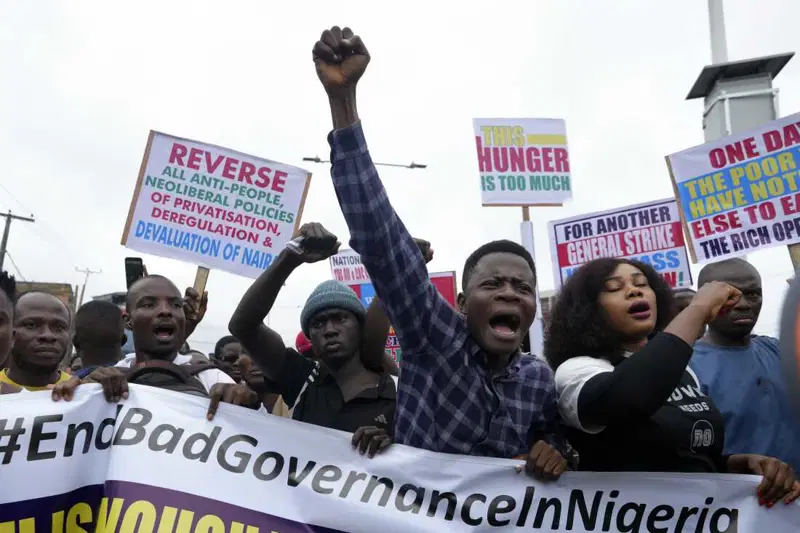
The promise was apparently in response to the #EndBadGovernance protests organized earlier by youths across the country between August 1 and 10, 2024.
The confab is expected to hold under the theme, ‘Next-Gen Nigeria: Crafting Solutions, Owning the Future’.
The protests stemmed from Nigeria’s growing economic hardship and hunger which was due to record inflation, especially on food prices.
Some experts linked the protests to the execution of economic reforms, particularly the removal of fuel subsidies and the devaluation of the Naira following the removal of its peg to the US dollar designed to liberalize the Nigerian economy and attract foreign investment.
Many, mostly youth, were reportedly killed by security forces in a bid to disperse the protesters with four said to have been shot dead in Borno and four in Niger on the first day of the protests.
Three protesters were also reportedly killed in Kaduna and two in Jigawa, bringing the total number deaths to at least 14.
Security forces action on the protests generated widespread outrage after scores of protesters deemed to be minors were arrested, detained and arraigned in court contrary to the law which forbids the prosecution of the underage.
It took a broadcast by the president to bring an end to the protests.
But in another broadcast to mark the National Day Anniversary on October 1, 2024, Tinubu promised to convene a National Youth Conference “to address the diverse challenges and opportunities confronting our young people”.
Meanwhile, 10 months after, Sunday Vanguard learnt that preparations for the confab only commenced several weeks ago with registration portal being put up and closing mid July.
And to make matters worse, many activists who spoke to Sunday Vanguard indicated they were unaware of the registration portal to enable members register and get members to participate in the process.
Curiously, no provision was made for the confab in the 2025 Budget, leading many activists to conclude that government was not sincere about holding it.
The Planning Committee, in the meantime, says it was still waiting for final approval from the president and essential security clearance before proceedings could begin.
In an exclusive interview with Sunday Vanguard in Abuja, Chief Obinna Nwaka, Chairman of the Contact and Mobilisation Subcommittee of the National Youth Conference Planning Committee, said 90 per cent of the planning process was already complete, with only final authorisations pending.
“We’re just waiting for the final memo from Mr. President so we can begin. We’re almost there, 80%. In fact, 90% of the planning stage is complete. Now it’s about execution, and we’re nearly ready. Yes! We’re just waiting for the memo from the government,” Nwaka stated.
According to him, the conference aims to engage 36,000 young people from Nigeria’s 360 federal constituencies and had already received over 155,000 registrations.
From this number, 100 participants will be selected from each constituency as participants in the special youth initiative.
The programme will begin at the constituency level before moving on to zonal conferences in key states: Imo (South-East), Bauchi (North-East), Kano (North-West), and Lafia (North-Central).
Nwaka emphasised that while preparations are complete, the team cannot proceed without the green light from relevant authorities.
“We’re waiting for the final memo from the ministry to kick things off. The planning is done, everything is in place. All we’re waiting for now are the security reports and the final date approval from the ministry. Once that’s sorted, we’ll be good to go,” he explained.
The conference is designed to be a national platform for addressing youth-related issues and promoting inclusive dialogue across all regions.
With rising youth unemployment and growing frustration, the event is also expected to provide meaningful empowerment opportunities.
The zonal conferences are intended to boost regional participation, with one host state representing each geopolitical zone.
According to Nwaka, this structure is aimed at ensuring balanced representation and fostering national unity.
Although no date has been officially confirmed, Nwaka assured that the event will hold soon.
“The conference will take place soon, and we’ll make an official announcement shortly,” he said.
The president had said during the October 1, 2024 broadcast: “As we work to overcome the challenges of the day, we remain mindful of the next generation as we seek to galvanise their creative energy towards a better future.
“We lead today with the future we wish to bequeath to our children in focus, recognising that we cannot design a future that belongs to them without making them its architects.
“Considering this, I am pleased to announce the gathering of a National Youth Conference.
“This conference will be a platform to address the diverse challenges and opportunities confronting our young people, who constitute more than 60 per cent of our population.
“It will provoke meaningful dialogue and empower our young people to participate actively in nation-building. “By ensuring that their voices are heard in shaping the policies that impact their lives, we are creating a pathway for a brighter tomorrow.
“The 30-day confab will unite young people nationwide to collaboratively develop solutions to issues such as education, employment, innovation, security, and social justice.
“The modalities of this confab and selection of delegates will be designed in close consultation with our young people through their representatives. “Through this confab, it will be our job as leaders to ensure that their aspirations are at the heart of the conference’s deliberations.
“The government will thoroughly consider and implement the recommendations and outcomes from this forum as we remain resolute in our mission to build a more inclusive, prosperous, and united Nigeria.”
The stall has drawn outrage from some critics who said government was not sincere on the confab right from the beginning.
Youth deserve clarity —Adeyanju
A human rights activist and lawyer, Deji Adeyanju, described the stall of the confab ten months after Tinubu’s promise as concerning, saying the Nigerian youth deserve clarity.
Adeyanju said: “It has been ten months since President Bola Ahmed Tinubu announced the National Youth Confab in his Independence Day address on October 1, 2024, under the theme: ‘Next-Gen Nigeria: Crafting Solutions, Owning the Future’.
“The conference, which was proposed to run for 30 days in the first quarter of 2025, was widely welcomed by young Nigerians as a bold and inclusive initiative. However, the lack of any further communication or indication of preparedness has raised serious concerns.
“This prolonged silence is troubling. It risks sending the message that the confab may have been a symbolic gesture rather than a strategic policy initiative. Nigerian youth are key players in shaping national progress. Any delay or lack of transparency on issues that concern them only contributes to growing distrust between government and its young population.
“With the political climate already beginning to shift toward the 2027 general elections, the likelihood of the confab being convened diminishes with each passing month. Without a clear timeline or preparatory steps, Nigerians may rightly begin to view the confab as a political tool rather than a genuine forum for national development. However, there is still a chance to salvage it, if action is taken immediately.
“The President must publicly reaffirm his commitment to the National Youth Confab. The Federal Ministry of Youth Development and relevant stakeholders should be tasked with a clear mandate to begin implementation. Youth engagement cannot be postponed. If the administration truly wants to secure a legacy of inclusion, innovation, and growth, it must take deliberate steps now, not later.
Message
”Do not lose hope. Let this silence not be a reason to retreat but a reason to speak louder, organize better, and push harder. The future belongs to those who insist on being part of its design. Keep the issue alive on every platform, from campuses to communities, and from social media to the streets. We must remind our leaders that we are not a footnote in Nigeria’s story, we are co-authors.”
Absence of communication risks eroding trust —ActionAid, Country Director
In another reaction, the Country Director, ActionAid Nigeria, AAN, Dr Andrew Mamedu cautioned that the prolonged absence of communication risks eroding the confidence, excitement and trust young people have developed in the government if things are not clarified about the long awaited confab.
Mamedu said: “ActionAid Nigeria is deeply concerned about the prolonged silence from the Presidency regarding the National Youth Confab. It sends a troubling message about the government’s commitment to meaningful youth engagement. Young people in Nigeria have waited months for an opportunity to participate in shaping policies that directly affect their lives on education, jobs, social justice, and civic inclusion.
“The absence of communication risks eroding trust and reinforcing the perception that young people are only included rhetorically, not substantively, in national development processes.
“In a country where six out of every ten citizens are under 25, delays aren’t just administrative hiccups, they are signals that can either energise or alienate the generation that will decide Nigeria’s future.”
– 2027 political activities
“At this point, the silence and lack of transparency cast serious doubt on whether the Youth Confab will hold at all. As political actors begin to shift their focus toward the 2027 elections, there is a real risk that the programme will be deprioritised or shelved altogether.
“Right now, optimism is fading fast. Since April 2025, the mood has swung from governing to campaign mode: lawmakers are defecting to the ruling APC, others are shopping for new party platforms, and the entire political class is positioning for 2027.
“In that climate, a month-long, youth-led conference looks less like a priority and more like a liability.
“A genuine forum would invite unscripted questions from young Nigerians that would spotlight problems the government would rather manage behind closed doors.
“At the same time, senior officials are consumed with consolidating support, reshuffling appointments, and fundraising, leaving little bandwidth to design and run a 30-day national dialogue.
“The numbers reinforce the doubt. When the ¦ 54.99 trillion 2025 Budget became public, both investigative reporters and ActionAid Nigeria’s report on the 2025 Appropriation Act show no allocation for the confab; in public finance, no appropriation almost always means no implementation.
“We can look at it from two case scenarios: The best-case scenario is that the government scrambles a last-minute, photo-op version of the event, uses hashtags, creates glossy banners, etc.; and the worst-case scenario is that the confab remains a line in the Independence Day speech and quietly disappears.
“At this point, only a public timeline, a named steering committee, and a budget allocation would restore credibility.
– Advice
“Our advice to President Tinubu is that leadership isn’t measured by the promises you announce, it’ is measured by the ones you deliver.
“Nigerians must be assured that the Youth Confab was not just a public relations exercise, it will indeed hold, as positioned, as a mechanism for listening, co-creating solutions, and investing in intergenerational dialogue.
“We urge the President to be reminded of the #EndSARS movement, where an estimated 28/ million people mobilised online and thousands of others in physical spaces across the nation drew global attention.
“Ignoring these young voices may become not just a political misstep but may ultimately undermine social stability.
“We advise the President and the Ministry of Youth Development to issue an official update on a clear roadmap for the Youth Confab with dates, structures, selection criteria, and the policy outcomes the conference is meant to shape, and open the planning room to civil society coalitions, youth-led networks, and the National Youth Council of Nigeria so everyone can see how decisions are made.
“Back those words with a dedicated line in the next supplementary budget; a promise without funding looks like lip service. And if the original thirty-day, single-venue model is no longer workable, pivot quickly to a series of regional town halls that feed into one national policy document.”
‘Nigerian youth continue to demand answers’
“ActionAid Nigeria calls on Nigerian youth to ensure that their silence does not mirror the silence of the government. Youth are not just the future of the country; they are the present.
“We urge Nigerian youth to continue demanding answers, to organise constructively, and to amplify their voices through all available civic spaces. “The delay in convening the Youth Confab does not invalidate their demands. Rather, it reinforces the need to sustain the struggle for meaningful inclusion.
“At ActionAid Nigeria, we stand in solidarity with young people. We encourage them to keep asking critical questions and to continue holding those in power to account.
“The government’s silence is not just a missed deadline, it is a clear reminder that the system continues to underestimate the energy, insight, and leadership capacity of young people.
“History has proven this wrong time and again, from the anti-SAP marches of the 1990s, to the 2012 fuel subsidy protests, and most recently, the #EndSARS movement in 2020 and the #EndBadGovernance protests of 2024, all of which were youth-led.
“Young people are not too young to run, too distracted to care, or too powerless to act.
“If those in power will not convene them, they can organise themselves in community halls, on campus grounds, and in virtual rooms.
“Platforms like MOTiON (Movement for the Transformation of Nigeria) provide the space for young people to come together, develop manifestos, tell their stories through film, launch petitions, and continue to show up wherever decisions are made.”
– ‘Confab activities commenced, registration portal closed’
However, in a reaction, Lead, Civic Space Strengthening, Global Rights, Damilola Decker, asserted that the preparations for the conference have commenced with registration portal being put up and closing in mid July, and some other activities.
Decker said: “To be accurate, while there was a prolonged silence following the president’s announcement, especially considering the context in which the idea was born during the #EndBadGovernance protests, there has been a recent flicker of activity.
“An online portal was launched to facilitate registration and expressions of interest to participate, which reportedly closed on the 14th of July 2025”, he said.
“This move does suggest some administrative progress. However, it raises deeper questions about why this conference is being held and how it is being organized.
“The confab was announced at a time when young Nigerians were expressing genuine and growing frustration over issues like insecurity, inflation, education, and a general failure of governance.
“At the time, the announcement seemed more like a political pressure valve than a sincere effort to engage youth in shaping the nation’s future.
“Our concern has always been that the conference could mirror past national dialogues and summits that produced lofty communiqués and glowing speeches but were never translated into action.
“We also worry about the integrity of the process, particularly how delegates are selected. If delegate selection is shrouded in favouritism, nepotism, or political patronage, it will rob the conference of legitimacy and public trust.We are strong advocates for youth inclusion.
“Young people make up to 65 per cent of Nigeria’s population. Any conversation about Nigeria’s future must involve them meaningfully, not symbolically. But we are not interested in empty performances or cosmetic participation.
“We are interested in real solutions and concrete outcomes that address the urgent challenges confronting Nigeria today, from education and employment to national security and the right to civic participation.
“The National Youth Confab must not become a tick-box exercise. It must be driven by sincerity of purpose and a commitment to translate youth voices into meaningful policies and institutional change.
“Anything less will be a disservice to the millions of young Nigerians who, time and again, have been promised inclusion but met with silence.
– ‘Deepen democratic participation in Nigeria’
“Our primary concern has never been solely whether the National Youth Confab will eventually take place.
“Our focus has always been on the broader question: How can we deepen democratic participation in Nigeria and ensure that our political processes truly reflect the will of the people?
“The reality is that Nigeria continues to witness low levels of civic engagement. “In the last general elections, over 93 million Nigerians registered to vote, but fewer than 30 per cent participated in the presidential and National Assembly elections. This dramatic drop-off speaks to a crisis of confidence in the democratic process.
“There are many reasons behind this disengagement. The threat of violence, both perceived and real, plays a significant role.
“Hate speech and fake news contribute to an atmosphere of fear and mistrust. Incidents of actual violence at polling units further discourage voters.
“At the same time, many Nigerians believe that the electoral system is fundamentally rigged.
“They feel that elections are predetermined and that their votes make no difference. This disillusionment is toxic to any democracy.
“Unfortunately, rather than confront these challenges, many political leaders appear more focused on preserving their political interests.
“The rampant party defections we continue to witness suggest that political positioning and personal gain take precedence over electoral reform or institutional credibility.
“Very little effort is being made to restore public trust or address the gaps that weaken our democratic culture.
“It is also concerning that key legal provisions designed to preserve the integrity of the electoral process are rarely enforced.
“Section 92(1) of the Electoral Act 2022 explicitly prohibits the use of abusive or intemperate language that may provoke violence or resort to force during political campaigns.
“Yet we continue to see hate speech weaponized with impunity to manipulate public opinion and discredit opponents.
“So, whether or not the confab holds, the deeper issue remains: Are we building the kind of political environment that encourages citizens, especially young people, to engage with hope and trust in the system?
“Until we shift our national focus toward restoring electoral integrity, strengthening institutions, and holding bad actors accountable, even the best-organized conferences will offer only symbolic value.
“We believe that genuine participation and democratic accountability must be the foundation for any effort to shape Nigeria’s future. That remains our focus, with or without a National Youth Conference.
“Our advice to President Bola Ahmed Tinubu is simple and direct: Focus on policies that tangibly improve the lives of Nigerians, especially young people, and prioritize building a credible, participatory, and peaceful electoral process ahead of the 2027 general elections.
“As the head of the executive arm of government, the president holds significant responsibility for shaping the political atmosphere in which elections are conducted.
“He oversees all federal security agencies and must therefore ensure that they are deployed in a manner that protects voters, not intimidates them.
“And to every young Nigerian, this moment is a reminder that in a democracy, power ultimately rests with the people. As citizens, you are not expected to sit back and wait for government promises to materialize on their own.
“The Nigerian Constitution guarantees you the right to protest, to express yourself freely, and to associate with others when you are dissatisfied with any governmental policy or inaction.
“If you believe in the importance of the Youth Confab or any issue that affects your future, you must not sit quietly. Democracy thrives when citizens raise their voices, peacefully and consistently. Demand answers. Demand transparency. Demand action. Use every tool at your disposal—social media, petitions, town halls, peaceful assemblies, and community organising—to call for the change you want to see.
“Get informed, understand the issues and engage the process. Know your rights and do not allow them to be trampled on. Leadership responds to pressure, and history shows that progress comes when citizens make it impossible to ignore their voices”.
– Silence On Youth Confab Unfortunate — CISLAC
For his part, the Executive Director, Civil Society Legislative Advocacy Centre, CISLAC, and Chairman, Transparency International, TI, Nigeria, Auwal Rafsanjani, expressed pain over the long silence over the National Youth Conference, describing it as an “unfortunate missed opportunity”, while speaking on pertinent issues concerning young Nigerians and the way and manner government treats them.
Rafsanjani said: “CISLAC views the President’s prolonged silence on the National Youth Confab as an unfortunate missed opportunity to demonstrate sincere commitment to youth inclusion, policy responsiveness, and intergenerational equity.
“When a sitting President makes a public promise—especially during a national broadcast—it becomes a matter of public trust and accountability.
“The ten-month silence since October 1, 2024 not only erodes confidence in government pronouncements but deepens the historical mistrust between the Nigerian youth and successive administrations.
“At a time when Nigerian youth face multidimensional challenges—unemployment exceeding 40% (NBS, 2023), mass emigration under the so-called ‘Japa’ wave, voter apathy, and rising mental health crises—keeping silent on a landmark initiative like the Youth Confab is both insensitive and strategically regressive.
“While CISLAC remains hopeful, political realism tempers our optimism. As 2027 draws closer, political actors are already recalibrating towards electoral strategy rather than meaningful governance. The youth confab may now be perceived as politically ‘inconvenient’—likely to trigger uncomfortable questions about job creation, police brutality, tuition hikes, or constitutional reform—issues successive governments have side-stepped.
“If urgent clarity isn’t provided before the end of Q3 2025, it is reasonable to conclude that the confab has been quietly shelved in favour of more politically expedient pursuits. That would be a grave error.
“CISLAC advises the president to remember that legacies are not built solely on brick and mortar or IMF-praised reforms—they are built on people, especially the youth who form over 60% of Nigeria’s population. We urge the president to:
“Announce a firm date for the Youth Confab and publicly recommit to its original theme: “Next-Gen Nigeria: Crafting Solutions, Owning the Future.”
“Ensure genuine representation—not gate-kept by partisan youth wings or elite cronies.
“Let underrepresented voices from rural communities, people with disabilities, informal sector youth, students, creatives, and young entrepreneurs lead the conversation.
“Adopt resolutions from the confab into policy, not just as a talk-shop but as a national blueprint guiding education, employment, innovation, and governance priorities.
“Delay is dangerous. Ignoring this platform may provoke youth disillusionment and further erode civic trust.
‘We call on youth groups, unions, creatives, student associations, and others to make demands’
“Dear Nigerian youth, power rarely concedes anything without demand.
“The silence around the Youth Confab is not accidental—it is political. It is a test of our collective memory, civic vigilance, and organising power. CISLAC calls on youth groups, unions, creatives, student associations, and community networks to begin coordinated advocacy demanding answers.
“You were promised a seat at the table. Demand the chair, the microphone, and the agenda. Use your voice—online, in campuses, in communities, and in the streets if needed—to insist that you are not the leaders of tomorrow, but the stewards of today.
“A government that can plan billion-naira summits for foreign investors can also fund a domestic platform for youth policy input. This is not a favour—it is your right.”
‘Silence worrying, disappointing’
Also, the Youth Representative, Council of Agriculture and Food Security Federal Republic of Nigeria, Jerry Tobi Olanrewaju, expressed disappointment over the long silence and delay to convene the Youth Confab.
Olanrewaju said: “The silence is worrying and disappointing.
“The National Youth Confab was positioned as a landmark moment for youth inclusion and solution-driven engagement.
“Yet, ten months later, there is no clear communication, no planning updates, and no indication of commitment.
“For a government that claims to prioritise the youth, this lack of follow-through sends a message that youth participation is not a priority.
“As someone who works with young people building businesses and food systems from the ground up, I can tell you that this silence is a betrayal of trust.
“Realistically, with 2027 approaching, attention will shift to politics and elections. However, this is precisely why the confab should take place now. If the government is serious about inclusive governance, it must rise above political distractions and fulfil this promise.
“The confab should not be reduced to a campaign tool — it should be a platform that institutionalises youth voices in national policy. If delayed any further, it risks being seen as political tokenism.
“Mr. President, you made a promise that inspired hope among millions of young Nigerians. Fulfil it with urgency and sincerity. Establish a multi-sectoral committee comprising youth leaders, development experts, and innovators to plan and execute the conference.
“Make it a solutions-driven space with clear integration into national policies. “Let it go beyond speeches — create actionable outcomes that address real issues like youth unemployment, food insecurity, education gaps, digital access, and enterprise funding. Show leadership by listening and acting. Let this be a defining moment of your administration.
“To my fellow young Nigerians: don’t let this silence discourage you. We have always been builders — in our farms, startups, music, activism, and classrooms.
“The confab was supposed to give us a national stage, but even without it, our work continues. Let’s stay engaged.
“Let’s demand answers and accountability. Let’s continue to organise, innovate, and collaborate across states and sectors.
“Whether they hold the confab or not, we are already shaping the future — and they will have no choice but to acknowledge our work and voices. Keep pushing, keep building, and don’t be silent.”
Credit: Vanguard News
WARNING: If You Are Not 18+, Don’t Click The Link Below 👇🫣
https://abnormalitylovingmammal.com/kx6iepv2qm?key=6c14bd1d68e1eba721851f19778f5efe
https://poawooptugroo.com/4/8902554
Please don’t forget to “Allow the notification” so you will be the first to get our gist when we publish it.
Drop your comment in the section below, and don’t forget to share the post.
Never Miss A Single News Or Gist, Kindly Join Us On WhatsApp Channel:
https://whatsapp.com/channel/0029Vad8g81Eawdsio6INn3B
Telegram Channel:
https://t.me/gistsmateNG