
The Federal Government has raised alarm over the growing diplomatic and security concerns linked to the coronation of “Eze Ndigbo” (Igbo kings) in foreign countries, as Ohanaeze Ndigbo Worldwide formally abolished the practice outside Igboland, a decision it says is necessary to curb tensions and protect Nigeria’s image abroad.
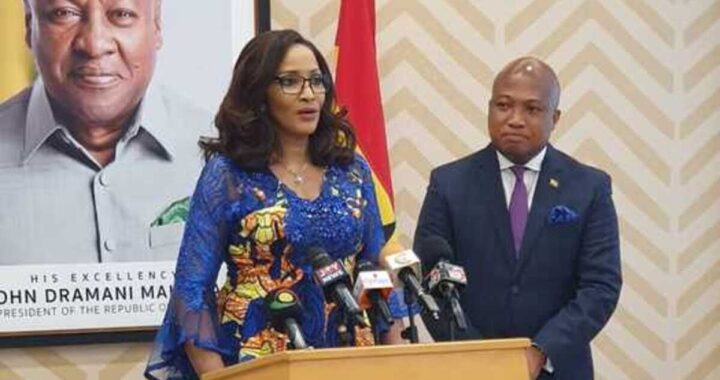
Minister of State for Foreign Affairs, Bianca Odumegwu-Ojukwu, disclosed the government’s position at the Imeobi meeting, the apex decision-making body of Ohanaeze, in Enugu on Thursday, describing the proliferation of such titles overseas as an embarrassment to Nigeria and a trigger for avoidable conflicts.
She noted that while diaspora Igbo communities have the right to promote their cultural heritage, the assumption of traditional rulership roles in foreign lands has repeatedly sparked disputes, both within Igbo communities and with host populations.
The controversy recently escalated in Eastern Cape, South Africa, following the coronation of Solomon Ogbonna Eziko as “Eze Ndigbo na East London,” an event that provoked outrage among local residents and authorities. The situation degenerated into violent protests, with reports of arson, looting, and destruction of at least 13 vehicles, as demonstrators opposed what they viewed as a challenge to local traditional authority structures.
Authorities, including the provincial House of Traditional and Khoi-San Leaders and the Department of Cooperative Governance and Traditional Affairs, declared the installation illegal, while Nigeria’s diplomatic mission distanced itself from the ceremony, describing it as a misinterpreted cultural event.
Odumegwu-Ojukwu said the Ministry of Foreign Affairs had since activated diplomatic channels to manage the fallout, adding that Nigeria’s High Commission in South Africa and embassy in Pretoria had intervened to calm tensions and urge Nigerians to maintain restraint.
She also recalled a similar episode in Accra, Ghana, in July 2025, where protests against Nigerians were sparked by issues surrounding the Eze Ndigbo institution. According to her, tensions only subsided after high-level engagements with John Mahama, who reaffirmed his country’s commitment to regional cooperation and the free movement protocols of ECOWAS.
The minister warned that the safety of Nigerians and their businesses abroad could be jeopardized by such developments, urging strict adherence to the new directive abolishing diaspora traditional rulership titles.
Backing the decision, Ohanaeze President-General, Azuta Mbata, declared that any conferment or acceptance of the Eze Ndigbo title outside Igboland would no longer be recognised by the Igbo leadership.
“Anybody who is being awarded that type of title anywhere outside Igbo land is on his own,” Mbata said, adding that the organisation would notify state governments and Nigerian missions worldwide of its position.
He further disclosed that sanctions would be determined in consultation with traditional rulers in the South-East and enforced at the community level against violators.
The Federal Government also pledged to circulate the Ohanaeze resolution through its embassies and high commissions, as part of broader efforts to prevent further diplomatic incidents tied to the controversial practice.
Odumegwu-Ojukwu further emphasised that Nigeria’s foreign policy priorities include the protection of its citizens abroad and the preservation of cordial bilateral relations, warning that actions capable of undermining host country laws or traditional institutions could have far-reaching consequences for Nigerians in the diaspora.
She explained that many host countries operate clearly defined traditional governance systems, and any parallel structures—real or perceived—could be interpreted as an affront to sovereignty, thereby escalating tensions beyond cultural misunderstandings into diplomatic disputes.
The minister added that ongoing engagements with diaspora leaders would be intensified to sensitise them on acceptable cultural expressions that do not conflict with local laws or provoke host communities, noting that embassies have been directed to monitor such activities more closely.
On its part, Ohanaeze Ndigbo Worldwide reiterated that the abolition of the Eze Ndigbo title in the diaspora is not an attempt to suppress Igbo identity, but rather a corrective measure to preserve unity and prevent actions that could endanger the collective interest of Ndigbo globally.
Stakeholders at the Imeobi meeting also stressed the need for stronger collaboration between traditional institutions in the South-East and diaspora organisations to create structured cultural leadership systems that align with international norms.
WARNING: If You Are Not 18+, Don’t Click The Link Below 👇🫣
https://calculatepredestinationset.com/u36k6hvh?key=9d5a995551042f49ca200d04746b52ad
Did you want to monetize your website, join MONETAG or ADSKEEPER and start earning
Please don’t forget to “Allow the notification” so you will be the first to get our gist when we publish it.
Drop your comment in the section below, and don’t forget to share the post.
Never Miss A Single News Or Gist, Kindly Join Us On WhatsApp Channel:
https://whatsapp.com/channel/0029Vad8g81Eawdsio6INn3B
Telegram Channel:
https://t.me/gistsmateNG