The Federal Government has announced plans to phase out Nigeria’s long-standing 6-3-3-4 education system as part of a sweeping reform targeted at addressing the growing number of out-of-school children across the country.
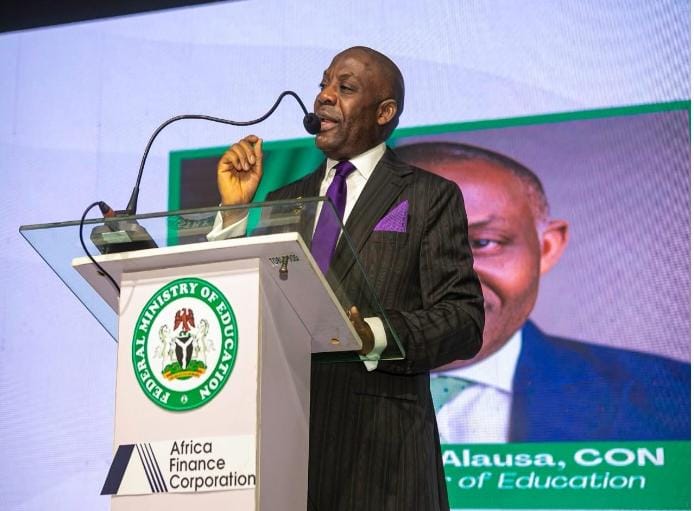
The Minister of Education, Dr. Maruf Tunji Alausa, disclosed this in Abuja during the inauguration of the Universal Basic Education Commission (UBEC) Ministerial Implementation and Monitoring Committee.
Alausa said the current structure, which separates Junior Secondary School (JSS) from Senior Secondary School (SSS), has failed to achieve its objectives and has contributed significantly to the nation’s school dropout crisis.
Nigeria’s 6-3-3-4 education framework consists of six years of primary education, three years of junior secondary education, three years of senior secondary education and a minimum of four years of tertiary education.
According to the minister, government findings indicate that the separation of junior and senior secondary schools has created barriers to educational progression, resulting in millions of children dropping out before completing their secondary education.
He noted that while the country has approximately 80,000 public primary schools, there are only about 15,000 junior secondary schools, creating a major transition gap that prevents many pupils from continuing their education after primary school.
Alausa lamented that despite high enrolment figures at the primary level, only a fraction of learners eventually complete senior secondary education.
“About 24 million children enrol in our primary schools, but only about four million complete senior secondary school.
“This means that more than 20 million children are dropping out between primary and secondary education. We must ask ourselves where these children are going,” he said.
The minister maintained that the policy of disarticulating junior and senior secondary education has led to overcrowding in some schools while leaving others underutilised.
“We have overflowing junior secondary schools and empty senior secondary schools. I can objectively report today that this disarticulation policy has failed.
“We will phase it out because it is not serving the best interests of Nigerian children,” he stated.
Alausa added that the administration of President Bola Tinubu was determined to reverse the trend and ensure a seamless transition for students throughout the education system.
He stressed that the proposed reform would be presented before the National Council on Education for deliberation and formal approval.
As part of efforts to strengthen basic education delivery, the minister also inaugurated a committee chaired by education expert, Prof. Rashid Aderinoye, to oversee the completion, handover and effective utilisation of UBEC-funded Smart Schools, Bilingual Schools and Alternative Schools across the country.
Expressing concern over the number of completed educational projects lying idle, Alausa described the situation as a waste of public resources and a setback to efforts aimed at expanding access to quality education.
“The purpose of these schools is to educate children, not to remain locked up after completion. We must ensure that these facilities are put to use for the benefit of our children,” he said.
Earlier, UBEC Executive Secretary, Aisha Garba, highlighted progress made under the commission’s education intervention programmes.
She disclosed that 37 Smart Schools had been established nationwide, with 24 already operational, while the remaining schools were undergoing final furnishing and preparation for commissioning.
Garba further revealed that 30 schools had been constructed under the UBEC-Islamic Development Bank Bilingual Education Programme across nine states, with three boarding schools already in operation and four awaiting inauguration.
She added that the Alternative Schools Programme was providing flexible and inclusive learning opportunities for vulnerable and underserved populations.
Responding on behalf of the newly inaugurated committee, Prof. Aderinoye assured the Federal Government of its commitment to ensuring transparency, accountability and timely completion of educational projects, while working to improve access to quality learning across the country.
GISTSMATE MEDIA reports that the proposed reform represents one of the most significant changes to Nigeria’s education system in decades and is expected to reshape the structure of basic and secondary education once approved by relevant stakeholders.
WARNING: If You Are Not 18+, Don’t Click The Link Below 👇🫣
Did you want to monetize your website, join MONETAG or ADSKEEPER and start earning
Please don’t forget to “Allow the notification” so you will be the first to get our gist when we publish it.
Drop your comment in the section below, and don’t forget to share the post.
Never Miss A Single News Or Gist, Kindly Join Us On WhatsApp Channel:
https://whatsapp.com/channel/0029Vad8g81Eawdsio6INn3B
Telegram Channel:
https://t.me/gistsmateNG