When the senate passed the 2022 Electoral Act (Amendment) Bill on Wednesday, many Nigerians expected it to close the gaps exposed in the 2023 general election.
A major reform Nigerians had looked forward to was the legal backing for compulsory real-time electronic transmission of election results. The senate, however, rejected the proposal, extinguishing expectations of a stronger accountability framework.
The rejection triggered public outrage, renewed distrust in the electoral system, and reopened debates about transparency.
Supporters of the senate’s amendment insisted that nothing has changed: electronic transmission remains in the law. But critics say something fundamental was lost: a chance to make transparency compulsory.
So what exactly did the senate do? Why is it controversial? What have the courts said that has led Nigerians to demand real-time electronic transmission of election results? And what does it mean for future elections?
This explainer breaks it down.
WHY ELECTRONIC TRANSMISSION OF RESULTS IS A BIG ISSUE
For decades, Nigeria’s elections have been marred by allegations of manipulation during the collation of results. While voting often proceeds peacefully at polling units, disputes usually arise later — when results are moved from one collation centre to another.
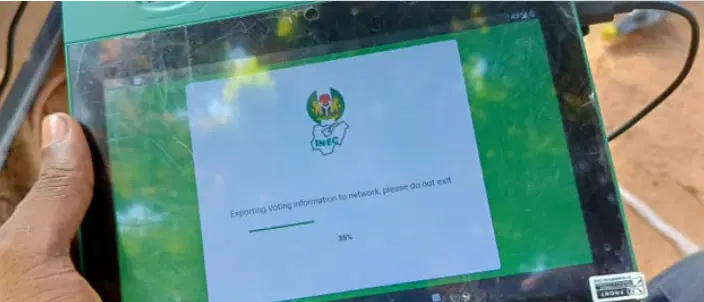
To address this, INEC introduced technological tools such as the bimodal voter accreditation system (BVAS) and the INEC result viewing portal (IReV) ahead of the 2023 elections. The goal was to ensure that once the results are counted and signed at polling units, they should be uploaded online for everyone to see.
This would reduce human interference, improve transparency, and allow citizens to verify results independently, no matter their location.
However, because these tools were not clearly entrenched in law, their use remained discretionary. That legal lacuna became a major problem in 2023.
WHAT DID THE SENATE REJECT?
At the centre of the controversy is clause 60(3) of the amendment bill.
The proposed amendment reads: “The presiding officer shall electronically transmit the results from each polling unit to the IREV portal in real time, and such transmission shall be done after the prescribed Form EC8A has been signed and stamped by the presiding officer and/or countersigned by the candidates or polling unit agents, where available at the polling unit”.
It clearly stated that this must occur after Form EC8A has been signed and stamped. Form EC8A is used to record political party votes at the polling units.
This amendment intends to make electronic transmission compulsory, ensure it is real-time, and link it directly to IReV. In other words, it would have transformed electronic transmission from a discretionary exercise into a legal duty.
But the senate rejected this proposal. Instead, it adopted section 60(5) of the existing Electoral Act 2022, which says: “The presiding officer shall transfer the results, including the total number of accredited voters and the results of the ballot, in a manner as prescribed by the Commission”.
This version leaves everything to the discretion of the electoral umpire, implying that INEC may choose electronic transmission where it is practicable. There have been arguments that several communities in the country are not covered by a telecommunication network to support the electronic transmission of results.
WHAT’S AKPABIO’S DEFENCE?
Akpabio said the senate merely retained what existed in the 2022 Act — the same provision used in the 2023 elections.
As public criticism mounted, Senate President Godswill Akpabio moved to clarify the chamber’s position.
“The social media is already awash with reports that the senate has literally rejected the electronic transmission of results. That is not true,” he said.
“This senate under my watch has not rejected the electronic transmission of results. It is in my interest as a participant in the next election for such to be done. So, please don’t go with the crowd.”
From a strictly legal standpoint, Akpabio is correct.
Section 50(2) says that “Subject to section 63 of this Act, voting at an election and transmission of results under this Act shall be in accordance with the procedure determined by the Commission”.
Section 62 (2) further stipulates that the commission “shall compile, maintain and update, on a continuous basis, a register of election results to be known as the National Electronic Register of Election Results which shall be a distinct database or repository of polling unit by polling unit results, including collated election results, of each election conducted by the Commission in the Federation, and the Register of Election Results shall be kept in electronic format by the Commission at its national headquarters”.
The senate did not remove electronic transmission from the law.
WHY CIVIL SOCIETY GROUPS ARE DISPLEASED
Civil society organisations that worked on the proposed amendment see the senate’s decision as a step backwards.
One of the strongest critics is Samson Itodo, executive director of Yiaga Africa.
“What the senate has done is to betray the trust of Nigerians and to make a mess of all the gains that we have made,” he said.
More importantly, Itodo accused the senate of ignoring clear judicial guidance. According to him, courts have already ruled that electronic transmission is “unknown to the law” because it is not explicitly stated. Therefore, the national assembly had a duty to fix that gap.
HOUSE OF REPS VERSION
Unlike the senate, the house of representatives adopted the clause mandating real-time transmission.
This difference reflects two approaches to the reform. While the house made it mandatory, the senate favours discretion, leaving INEC flexibility as provided in the extant law.
Both chambers must now harmonise these differences, among others. The final outcome will depend on which amendment the conference committee adopts.
WHAT THE COURTS SAID ABOUT E-TRANSMISSION OF RESULTS
Before the 2023 election
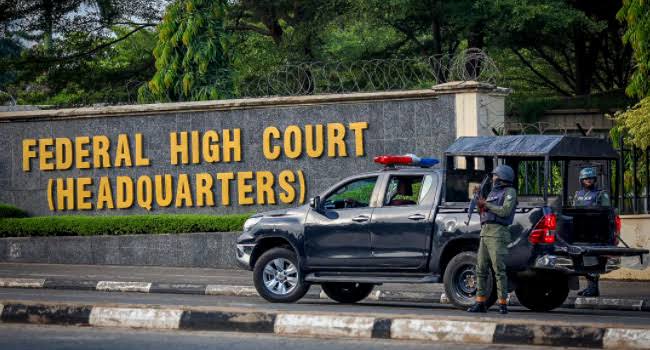
Before the 2023 elections, the Labour Party (LP) went to the federal high court in Abuja, seeking to compel INEC to adopt an electronic method for transmitting 2023 election results.
In January 2023, Emeka Nwite, the presiding judge, dismissed the case. He ruled that section 60(5) allows INEC to choose its method.
“This is to say that the commission is at liberty to prescribe or choose the manner in which election results shall be transmitted,” the judge said.
He added that nowhere in the law is INEC mandated to use electronic means.
“In view of the foregoing, can the act of the defendant (INEC) in collating and transferring election results manually in the forthcoming 2023 general elections be said to be contrary to the relevant provisions of the Electoral Act, 2022? The answer can only be in the negative as there is nowhere in the above-cited sections where the commission or any of its agents is mandated to only use an electronic means in collating or transferring election results,” the judge said.
“If any, the commission is only mandated to collate and transfer election results and the number of accredited voters in a way or manner deemed fit by it.”
After the 2023 election
After the 2023 election, disputes over IReV and the transmission of results reached the supreme court.
In a ruling, Inyang Okoro, who read the lead judgement, made several crucial clarifications.
IReV is not a collation system
The judge said IReV is not a collation system, but is meant to give the public the opportunity to view polling unit results on election day; therefore, if IReV fails, the election process does not stop.
The court noted that where the IReV portal fails, it does not stop the collation of results, which, up to the last election, was manually done, adding that the malfunctioning of the IReV deprives the public and even election administrators and monitors of the opportunity of viewing the portal and comparing the result collated with the ones transmitted into the IReV.
INEC has the power to choose transmission methods
The court interpreted sections 60(5), 62(1), and 64 of the Act, stating that INEC is at liberty to prescribe the manner in which election results are to be transmitted.
Although “shall” is used in the law, the court said it does not impose a strict obligation to use electronic means.
IReV failure cannot invalidate elections
The court ruled that the unavailability of the election result on the IReV portal cannot be a basis for nullifying an election, since hard copies are held by INEC, the police, and party agents.
“Thus, the unavailability of the election result on the IReV portal for whatever reason cannot be a ground upon which an election could be nullified, particularly as it was not the case of the appellants that the hard copies of the result sheets did not exist at any level of collation,” the court said.
WHY THESE RULINGS MATTER TO THE AMENDMENT BILL
These rulings created a clear legal reality. Under the current law, electronic transmission is optional. Courts will not compel it. This is why critics expected the amendment to close that loophole.
By refusing to mandate real-time transmission, critics believe the senate preserved the same legal weakness identified by the courts.
The controversy cannot be separated from what happened in 2023.
During the February 25 presidential election, many polling units failed to upload results promptly. INEC blamed technical glitches, while opposition parties alleged manipulation.
Despite protests, Bola Tinubu of the All Progressives Congress (APC) was declared the winner. His main challengers — Peter Obi and Atiku Abubakar of the Peoples Democratic Party — went to court. Although they lost, many Nigerians felt the system failed.
That is why this amendment matters so much. It was seen as a chance to prevent a repeat in the upcoming 2027 elections.
A GLIMMER OF HOPE
The senate and house have set up a conference committee to reconcile the amendment since they both passed different versions.
The senate conference committee is made up of Simon Lalong (Plateau, APC), Adeniyi Adegbonmire (Ondo, APC), Tahir Monguno (Borno, APC), Adamu Aliero (Kebbi, APC), Orji Kalu (Abia, APC), Abba Moro (Benue, PDP), Asuquo Ekpeyong (Cross River, APC), Aminu Abass (Adamawa, PDP), and Tokunbo Abiru (Lagos, APC).
The house of representatives panel comprises Bayo Balogun (Lagos, APC), who chairs the panel, Fred Agbedi (Bayelsa, PDP), Sada Soli (Katsina, APC), Ahmadu Jaha (Borno, APC), Igariwey Iduma Enwo (Ebonyi, APC), Saidu Musa Abdullahi (Niger, APC), and Zainab Gimba (Borno, APC).
This committee will decide whether the house version prevails or the senate position is adopted.
Credit: TheCable
WARNING: If You Are Not 18+, Don’t Click The Link Below 👇🫣
https://troubleduseful.com/u36k6hvh?key=9d5a995551042f49ca200d04746b52ad
Please don’t forget to “Allow the notification” so you will be the first to get our gist when we publish it.
Drop your comment in the section below, and don’t forget to share the post.
Never Miss A Single News Or Gist, Kindly Join Us On WhatsApp Channel:
https://whatsapp.com/channel/0029Vad8g81Eawdsio6INn3B
Telegram Channel:
https://t.me/gistsmateNG