
Forbes Magazine recently released its latest Africa Rich List and, as expected, the usual Nigerian heavyweights featured prominently.
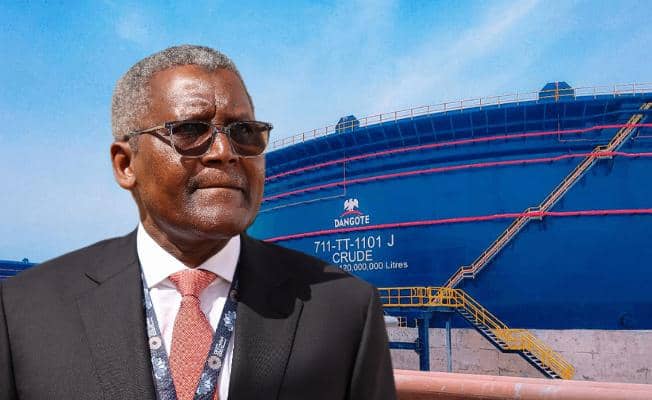
Leading the pack is Africa’s richest man, Aliko Dangote, with a net worth estimated at $28.5 billion. Abdul Samad Rabiu follows in third place with $11.2 billion.
Mike Adenuga ranks sixth with $6.5 billion, while Femi Otedola appears further down the list at number twenty-two with a fortune of $1.3 billion. Out of the twenty-three individuals listed across Africa, Nigerians accounted for four.
While the list confirmed Nigeria’s continued presence among Africa’s wealthiest individuals, something else stood out clearly. One of the country’s most industrious and commercially vibrant ethnic groups was once again missing from the rankings.
Yes, yet again, there were no Igbos on the Forbes Africa Rich List.
This absence is striking when one considers the strong entrepreneurial culture associated with the South-East and parts of the South-South regions of Nigeria. From the bustling trading hubs of Onitsha and Aba to expansive commercial networks across West Africa, the Igbo business presence is widely acknowledged. Their absence from a continental wealth ranking, therefore, raises an obvious question: why?
The answer becomes clearer when one understands how Forbes compiles its wealth rankings. Contrary to popular imagination, the list is not based on rumors, reputation, or street-level estimates of affluence. Forbes relies heavily on verifiable information that can be independently confirmed.
Analysts typically estimate wealth using publicly available financial data, corporate filings, stock market valuations, and transparent ownership structures. In practical terms, this means many of the individuals who appear on the list share one key characteristic: their businesses are publicly listed or operate in sectors where valuations are easy to estimate.
Take the Nigerian names already mentioned. Dangote’s wealth is largely tied to his holdings in Dangote Cement and other publicly valued enterprises. Rabiu’s fortune rests heavily on BUA Cement and BUA Foods, both listed companies with clear market valuations. Femi Otedola’s wealth similarly reflects publicly known stakes in listed banking and energy investments
Even where private assets exist, like Adenuga, analysts can estimate them using comparable companies and industry benchmarks.
Forbes also typically engages directly with individuals featured on the list. Those included usually agree to provide information for verification before publication. This process may include disclosure of global real estate holdings, stakes in private companies, cash balances, debt profiles, and other valuable assets. Participation, therefore, requires a degree of transparency that allows wealth to be independently verified.
This verification requirement offers an important clue. It suggests there may be far more billionaires in Nigeria than the list actually shows. Some wealthy individuals simply do not meet Forbes’ verification standards. Others may possess large fortunes tied to opaque private businesses that are difficult to value objectively. Still others may choose not to participate in the process at all.
For many Igbo-owned enterprises, this situation appears particularly relevant. A large number of successful businesses emerging from the region remain privately held family operations with limited disclosure structures. These firms may be extremely profitable yet remain largely invisible to global financial analysts.
Their owners may be immensely wealthy, but their fortunes exist outside the transparent frameworks that rankings like Forbes require. Another question naturally follows from this observation. Why are so few large Igbo businesses listed on the Nigerian Exchange?
Listing a company offers several clear advantages. Firms go public to raise capital, reduce ownership concentration, or institutionalize their structures for long-term sustainability. Public companies benefit from greater access to funding, stronger governance frameworks, and improved global credibility.
Yet many large Igbo-owned businesses appear uninterested in this route. Instead, they often prefer tightly controlled family structures where ownership and decision-making remain concentrated. Financing frequently comes from retained earnings, personal networks, or informal credit systems rather than capital markets.
This model has worked remarkably well. Igbo entrepreneurship is built on reinvestment, resilience, and an impressive ability to scale businesses without heavy reliance on formal institutions. Some privately owned firms operating in trading, manufacturing, and distribution across Nigeria could easily be worth hundreds of billions of naira.
However, there is a trade-off. Wealth that is private, opaque, and difficult to verify rarely attracts global recognition. International rankings and institutional investors tend to favor businesses that operate with transparent ownership structures and audited financial records.
In today’s financial ecosystem, visibility often follows institutionalization.
Institutional wealth also carries another advantage. It tends to outlive its founders. Public companies can survive leadership transitions, attract professional management, and expand across borders more easily. They become part of the economic infrastructure rather than remaining personal empires.
None of this diminishes the remarkable success of private entrepreneurship across Nigeria. On the contrary, the country’s commercial growth has been driven largely by privately built enterprises.
But as Nigeria’s economy evolves, the incentives for institutionalization are becoming stronger. Businesses that can attract institutional capital and global credibility will likely dominate the next phase of economic expansion. In today’s financial system, verifiable and transparent wealth is the oil that lubricates global recognition, investment flows, and long-term corporate influence.
For that reason, the absence of Igbo names from global rich lists may not reflect a shortage of wealth. It may simply reflect how that wealth is structured and measured.
As more Nigerian businesses embrace listing, stronger governance, and clearer disclosure, their wealth becomes easier to value, easier to scale, and ultimately harder for the world to ignore.
Credit: Nairametrics
WARNING: If You Are Not 18+, Don’t Click The Link Below 👇🫣
https://emitprocured.com/u36k6hvh?key=9d5a995551042f49ca200d04746b52ad
Did you want to monetize your website, join MONETAG or ADSKEEPER and start earning
Please don’t forget to “Allow the notification” so you will be the first to get our gist when we publish it.
Drop your comment in the section below, and don’t forget to share the post.
Never Miss A Single News Or Gist, Kindly Join Us On WhatsApp Channel:
https://whatsapp.com/channel/0029Vad8g81Eawdsio6INn3B
Telegram Channel:
https://t.me/gistsmateNG