
There seem to be subtle moves by agents and sympathisers of the government to adopt divide-and-rule tactics to sway minimum wage negotiations in the government’s favour when the process eventually begins.
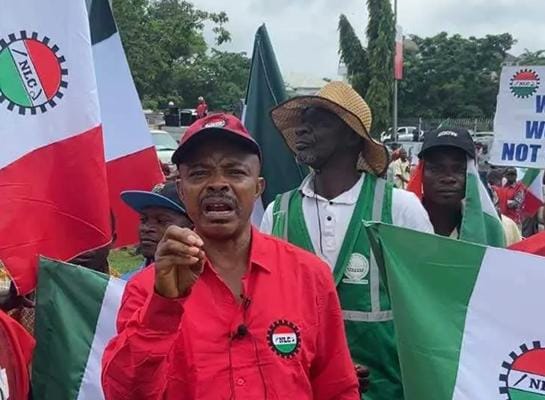
The President of the Nigeria Labour Congress (NLC), Joe Ajaero, who gave a hint of such possibility while speaking in Abuja yesterday at the opening of the 2026 NLC Harmattan School, however, warned against such clandestine moves, while urging trade unions and workers to maintain a united front in the struggle for improved wages and working conditions.
Ajaero said forces opposed to workers’ interests were already working to exploit differences among unions, spread rumours, and weaken labour’s bargaining position even before negotiations begin.
Speaking under the theme, ‘Organising in the Context of Socio-economic Transformation’, Ajaero urged workers to remain vigilant and resist attempts to set one union against another, stressing that unity remained the labour movement’s strongest instrument in securing a decent national minimum wage.
“At this point, as we prepare to negotiate a new national minimum wage, we want to draw your attention to the fact that the enemies of the labour movement are already at work. Their strategy is as old as it is dangerous: divide us, weaken our resolve and sabotage the forthcoming national minimum wage negotiations before they even begin,” he said.
The NLC president urged workers to speak with one voice, maintain a common negotiating position and ensure that the forthcoming wage negotiations produce meaningful improvements in workers’ living conditions.
For all breaking news and latest gist:
👉 JOIN GISTSMATE WHATSAPP CHANNELHe also called on the Federal Government to honour the October 27, 2026 agreement with organised labour, particularly the payment of the N70,000 monthly transport allowance and the establishment of the Tripartite National Minimum Wage Negotiation Council.
According to him, workers expect the agreed benefits to be paid in November, along with a monitoring meeting to assess implementation.
He urged state governments and private-sector employers to implement the agreement’s relevant provisions, stressing that fidelity to negotiated commitments was essential to building trust and sustaining industrial harmony.
Ajaero maintained that government agreements should not be treated as matters of convenience, warning that failure to honour commitments could undermine confidence in collective bargaining and industrial relations.
The NLC president linked the wage negotiations to the worsening economic conditions confronting workers, particularly rising costs of food, transportation, housing, healthcare and education.
He argued that the issue was no longer how much workers earned but whether their wages could guarantee a decent standard of living.
“A wage that does not correspond to the actual cost of living cannot provide a decent standard of living,” he said, insisting that economic reforms should be assessed not only through macroeconomic indicators but also by their impact on workers, pensioners, unemployed youths, small businesses and vulnerable households.
On the forthcoming 2027 general elections, Ajaero urged political parties and candidates to make employment, wages, social protection, education, healthcare, security, food production, infrastructure and industrial development central to their campaigns.
He said the elections should be issue-based rather than driven by personalities, ethnic considerations, political slogans and unfulfilled promises.
He also called on the Independent National Electoral Commission (INEC) to ensure transparency in its activities, particularly in preparing a credible voters’ register, insisting that citizens’ votes must determine electoral outcomes.
“Democracy means nothing if citizens cannot freely choose their leaders or if their votes do not determine outcomes,” he said.
The NLC president further stressed the need to strengthen workers’ education, describing it as a critical instrument for building an organised, politically conscious and empowered working class.
He said trade union education should extend beyond union constitutions and industrial relations procedures to cover economic policies, labour legislation, taxation, social protection, democratic governance, climate change and technological developments.
He noted that artificial intelligence, automation and digital platforms were transforming traditional employment relationships, requiring trade unionists to acquire the knowledge and capacity to respond to emerging challenges in the world of work.
Ajaero said the Harmattan School was designed to help union leaders and members understand these changes, strengthen their organising capacity, and develop strategies to protect workers’ interests.
He urged participants to engage actively in the sessions, question existing assumptions, and share experiences, adding that the programme should produce more informed and capable trade union leaders rather than merely award certificates.
He also called for stronger collaboration between organised labour and civil society organisations, saying the NLC’s responsibility extended beyond defending wages and workplace conditions to promoting democracy, social justice, equality and human dignity.
The Harmattan School is an annual workers’ education programme organised by the NLC to deepen trade union knowledge, strengthen leadership capacity and equip workers to respond to changing economic, political and workplace realities.
WARNING: If You Are Not 18+, Don’t Click The Link Below 👇🫣
https://nya5.com/link?z=11857196&var=
Did you want to monetize your website, join MONETAG or ADSKEEPER and start earning
Please don’t forget to “Allow the notification” so you will be the first to get our gist when we publish it.
Drop your comment in the section below, and don’t forget to share the post.
Never Miss A Single News Or Gist, Kindly Join Us On WhatsApp Channel:
https://whatsapp.com/channel/0029Vad8g81Eawdsio6INn3B
Telegram Channel:
https://t.me/gistsmateNG
Stay With Us, Join GISTSMATE MEDIA WhatsApp Group Here
Join WhatsApp Group