
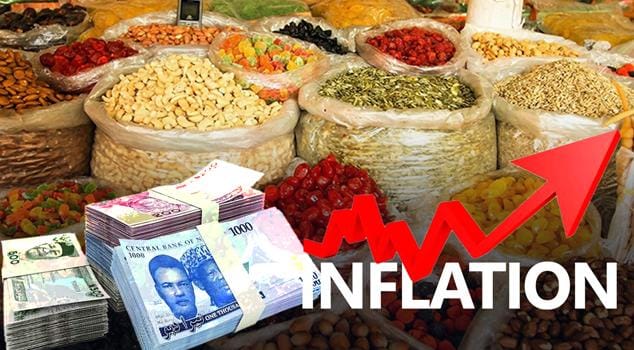
Nigeria’s imported food price growth slowed to 9.19 per cent in September 2026, its lowest level since March, according to calculations based on the latest data from the National Bureau of Statistics (NBS).
The imported food price index rose to 135.5 in September 2026 from 124.1 in the same month of 2025, representing an annual increase of 9.19 per cent.
The figure was lower than the 12.83 per cent recorded in August and the peak of 14.60 per cent recorded in May.
On a month-on-month basis, the index increased by just 0.07 per cent in September, compared with 0.89 per cent in August and 1.21 per cent in July.
The figures show that imported food prices continued to rise, but at a slower rate than in previous months.
The annual growth rate of the imported food price index has declined steadily since reaching 14.60 per cent in May 2026.
For all breaking news and latest gist:
👉 JOIN GISTSMATE WHATSAPP CHANNELIt fell to 13.62 per cent in June, dropped further to 13.25 per cent in July and declined to 12.83 per cent in August before reaching 9.19 per cent in September.
Despite the slowdown, the index increased from 120.0 in January to 135.5 in September, showing that imported food prices remained higher overall.
The slower growth rate does not mean imported food prices have fallen. Rather, it indicates that prices are increasing at a slower pace.
The slowdown comes as Nigeria continues to spend heavily on imported food.
Nairametrics previously reported that the country spent N3.30 trillion on food and beverage imports in the first half of 2026, with spending rising sharply in the second quarter.
Nigeria’s dependence on imported food remains a concern as households struggle with food affordability and the government seeks to increase local agricultural production.
The United Nations Food and Agriculture Organization (FAO) has also warned that about 34.7 million Nigerians could face severe food insecurity during the next lean season.
Rising production costs, insecurity and post-harvest losses have also threatened agricultural output. Farmers, particularly in the North-Central and North-West regions, have reportedly considered leaving the sector because of these challenges.
Meanwhile, Nigeria’s headline inflation rate declined to 14.63 per cent in September 2026 from 15.39 per cent in August, marking the fourth consecutive month of slowing inflation.
According to the NBS, annual food inflation stood at 19.59 per cent in September, compared with 20.16 per cent in September 2025.
On a month-on-month basis, food inflation fell to -1.55 per cent in September from 1.02 per cent in August, representing a decline of 2.57 percentage points.
The slowdown in imported food price growth comes alongside the decline in headline and monthly food inflation.
However, the figures do not mean that all food items have become cheaper for Nigerian consumers.
WARNING: If You Are Not 18+, Don’t Click The Link Below 👇🫣
https://nya5.com/link?z=11857196&var=
Did you want to monetize your website, join MONETAG or ADSKEEPER and start earning
Please don’t forget to “Allow the notification” so you will be the first to get our gist when we publish it.
Drop your comment in the section below, and don’t forget to share the post.
Never Miss A Single News Or Gist, Kindly Join Us On WhatsApp Channel:
https://whatsapp.com/channel/0029Vad8g81Eawdsio6INn3B
Telegram Channel:
https://t.me/gistsmateNG