
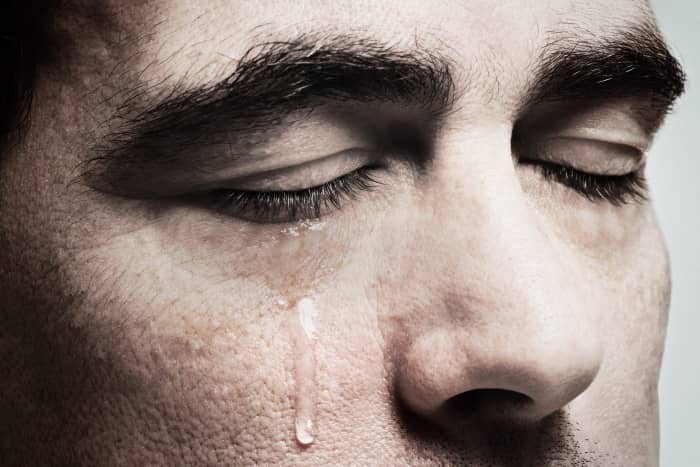
It’s often said that men are supposed to be emotionally tougher than women, raised to lead, protect, and shoulder responsibilities without faltering. But when death—the inevitable visitor—comes knocking and takes away a wife, what happens to the man left standing?
The companionship that once defined his strength suddenly transforms into the very thing that exposes his deepest vulnerabilities.
A bond built on shared dreams, mutual understanding, and quiet sacrifices shatters, leaving a husband to face not just the loss, but a life he now has to navigate all on his own.
While widows are frequently seen and openly supported in our communities, widowers often grieve in silence. Society tends to rally around the woman left behind, offering sympathy, scholarships for children, and communal support.
Meanwhile, the man, conditioned to be strong and self-reliant, is expected to endure without showing any signs of struggle. Behind the facade of leadership and resilience, many widowers wrestle with their pain in private—juggling fatherhood, the pressure to provide, and their heartbreak in a world that rarely stops to check in on how they’re really doing.
When Mr. Onaolapo, a retired teacher, lost his wife in 2021, the thought had never crossed his mind. “I never imagined she would go before me,” he reflects quietly.
“When it happened, it felt like a bad dream I just wanted to wake up from.” But that dream never ended. In the days that followed, grief settled heavily on his chest, dulling the meaning in conversations and draining the color from his daily routine.
“The first few days were awful. I didn’t even want to be alive. Nothing anyone said made sense to me.”
His loss was not just emotional; it hit him financially too. Having recently stepped down from his job to focus on evangelism—something his wife had encouraged, given her stable income—he suddenly found himself without any financial security. His entitlements were delayed, and his pension was barely enough. Out of their four children, only one had graduated.
Two were still in college, and the youngest was gearing up for university. His first daughter was just in her second year at university.
Just a month after giving birth, she lost her mother. “The first thought that hit me was, ‘How am I going to manage with these kids?’” he remembers. In the days leading up to and right after the burial, a flood of promises for help came in, but many of those offers never materialized. Beneath the surface of condolences and handshakes, he felt a rising worry about how to feed his family and keep them in school. There were times, he admits, when he went without food so his children could eat.
“People expect a man to be strong. They don’t really step up to help like they do for widows,” he explains. “Many who should lend a hand won’t, simply because you’re a man.”
There’s a lot of confusion in this situation. “Some advice just makes things worse because people don’t really get it. Only God knows the heart of someone who’s grieving,” he shares.
“The lonely nights in the cold, heat, and rain—they’re different. It’s not like being single. Back then, you were alone without any ties. This is different. You’ve lost a piece of yourself.”
He talks openly about the hidden struggles that widowers, especially younger ones, face. “There are temptations,” he confesses.
“And when you reach out for help, many don’t know how to react.” In his quest for stability and to shield himself from emotional pain, he remarried. But that new relationship came with its own set of challenges. “There are moments when I need guidance, and I still turn to God,” he admits.
Loneliness doesn’t make a grand entrance. It sneaks in quietly, filling empty chairs, leaving meals untouched, and cutting conversations short before they even start. For professor Lekan Sani, a widowed father who retired this year from the University of Ibadan, losing his wife meant not just losing a life partner but also the companionship that once brought rhythm to his days.
“The toughest part is the silence,” he confesses. “When you lose your spouse, you lose the person you share meals with, talk to, and plan your life alongside.” After her passing, the house felt strange and unfamiliar. Meals lost their warmth, and evenings dragged on endlessly. To cope, he turned to simple routines—watching television, listening to the radio, and finding solace in the little things.
In his quest for companionship without overshadowing his late wife, he gathered a small group of friends his age, calling it the June Circle. This club blossomed around friendship, engaging discussions, and mutual financial support. Through this circle, he rediscovered laughter, a gentle reminder that life still offers moments of connection.
Physical activity became a form of therapy for him. His daily walks not only kept his body fit but also occupied his mind. “If you stay idle, memories can overwhelm you,” he shares. “Walking helps clear the mind.”
Unlike many widowers who choose to remarry, Special Apostle Femi Mosadomi feels that remarriage isn’t necessary for him. “I prefer to live alone with her memories,” he states, with a sense of calm conviction.
Prophet Emmanuel Gunwa Ajayi points out that the silent struggles faced by widowed fathers are more common in Nigeria than society tends to recognize.
Cultural norms often pressure men to appear emotionally strong and quickly take on their responsibilities, leaving little space for visible mourning. From his experience as a pastor, he observes that many fathers bury their unresolved grief beneath work, church activities, and daily tasks. He explains that losing a spouse can deeply challenge a father’s faith, raising difficult questions about God’s will. Yet, it can also refine and strengthen their spiritual reliance. He believes that grief doesn’t negate faith; instead, it can coexist with doubt, silence, and spiritual struggles.
Prophet Ajayi encourages widowed fathers to view themselves not as replacements for their late spouses but as caretakers of their families, supported by God’s grace. He urges them to seek divine wisdom, embrace community support, and demonstrate authentic faith to their children. Healing, he emphasizes, doesn’t mean forgetting or erasing the pain; rather, it’s about gradually transforming sorrow into strength and legacy. He also calls on the church to go beyond offering brief condolences, advocating for ongoing, practical support—creating safe spaces for grieving men, providing long-term pastoral care, and walking alongside them through their enduring journey.
Dr. Rachel Folashade Dare paints a vivid picture of the profound impact that losing a spouse can have, calling it “one of the most destabilizing life events anyone can experience.” She emphasizes that while both men and women grieve deeply, men often bear a unique psychological weight due to societal expectations.
According to her, “from childhood, men are socialized to suppress emotion,” leading them to believe that showing vulnerability is a sign of weakness. This often results in widowers internalizing their grief, while women may find solace in sharing their feelings. Dr. Dare warns that this tendency for men to suffer in silence can exacerbate feelings of “loneliness, anger, and despair.”
On top of the emotional turmoil, Dr. Dare points out that widowers face the sudden challenge of managing childcare, household responsibilities, and financial stress, which can lead to a drop in performance and an overwhelming mental load. She cautions that if grief isn’t expressed properly in those early weeks, it can deepen into depressive disorders, and in severe cases, untreated sorrow might even lead to psychosis. That’s why she strongly advocates for intentional support systems, urging families and communities to “encourage men to talk.” She reminds everyone that “seeking help is not weakness” and that the journey to healing truly begins when men are given the space to mourn openly, free from guilt.
The Father’s Pain is a heartfelt reminder that widowers are more than just providers; they are men who have loved deeply and experienced profound loss. Their journeys deserve our empathy, support, and the space to heal because grief doesn’t discriminate, and love continues even after death.
WARNING: If You Are Not 18+, Don’t Click The Link Below 👇🫣
https://troubleduseful.com/u36k6hvh?key=9d5a995551042f49ca200d04746b52ad
Please don’t forget to “Allow the notification” so you will be the first to get our gist when we publish it.
Drop your comment in the section below, and don’t forget to share the post.
Never Miss A Single News Or Gist, Kindly Join Us On WhatsApp Channel:
https://whatsapp.com/channel/0029Vad8g81Eawdsio6INn3B
Telegram Channel:
https://t.me/gistsmateNG