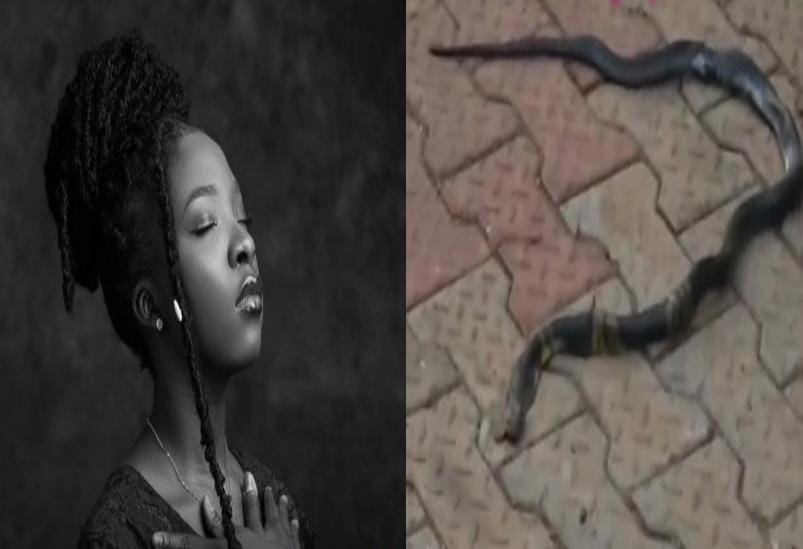
The tragic passing of Ifunanya Nwangene, the 26-year-old architectural graduate and standout contestant on The Voice Nigeria, has left the nation in mourning.
Known by her stage name Nanyah, she was a powerhouse of opera and jazz, a “Soprano Queen” whose life was cut short on January 31, 2026.
What to AVOID: Dangerous Myths
The Reality of Snakebites in Nigeria
Ifunanya was bitten by a cobra while sleeping in her residence in Abuja.
Despite her efforts to seek medical attention, she succumbed to the venom at the Federal Medical Centre (FMC) Jabi.
Her death has sparked a national conversation about the accessibility of anti-venom and, more importantly, the lack of public knowledge on immediate emergency protocols.
In Nigeria, where the Carpet Viper, Cobra, and Puff Adder are prevalent, knowing the correct first aid can mean the difference between life and death.
Critical First Aid: What to DO Immediately
If you or someone near you is bitten by a snake, the first 60 minutes (the “Golden Hour”) are the most vital. Follow these steps strictly:
1. Stay Calm
Panic increases your heart rate, which pumps the venom through your bloodstream faster.
2. Immediate Immobilisation (The “Splint” Method)
The most important goal is to slow the spread of venom. Venom travels primarily through the lymphatic system, which is pumped by muscle movement.
Keep the limb still: Use a makeshift splint (a sturdy stick or board) and bandages to keep the bitten arm or leg from moving.
Positioning: Keep the bite site at or slightly below the level of the heart. Do not elevate it, as this can cause venom to flow more quickly toward the chest.
3. Pressure Immobilisation Bandaging (PIB)
If the bite is from a neurotoxic snake (like a Cobra or Mamba), use a broad pressure bandage (like an elastic crepe bandage).
Wrap it as tightly as you would for a sprained ankle, starting from the fingers/toes and moving up the limb.
It should be firm but not so tight that it cuts off blood circulation (you should still be able to feel a pulse).
4. Remove Constrictive Items
Snake venom often causes rapid, severe swelling.
Immediately strip away: Rings, bracelets, watches, anklets, or tight clothing. If these are not removed early, they can act as unintended tourniquets, cutting off blood flow and leading to gangrene as the limb swells.
5. Identify (But Don’t Engage)
If possible, take a quick photo of the snake from a safe distance or note its physical characteristics (head shape, colour patterns).
Why it matters: Doctors need to know if they should administer Polyvalent anti-venom (for general bites) or a specific Monovalent anti-venom (like Echi-Tab for Carpet Vipers).
Warning: Do not attempt to kill or capture the snake. A “dead” snake can still reflexively bite for up to an hour.
6. Rapid Transport to a Tertiary Facility
Ifunanya’s case proved that smaller private clinics often lack the specialised cold-chain storage required for anti-venom.
Skip the local chemist: Go directly to a Federal Medical Centre (FMC) or a University Teaching Hospital.
Call ahead: If possible, have someone call the emergency ward to confirm they have anti-venom in stock while you are en route.
What to AVOID: Dangerous Myths
Nigerian “street wisdom” often suggests remedies that actually accelerate death or permanent disability.
DO NOT Use a Tourniquet: Tying a rope or belt tightly above the bite is one of the most common mistakes. It traps the venom in one area, causing massive tissue destruction, and can lead to amputation once the tie is released and the concentrated venom hits the heart.
DO NOT “Cut and Suck”: Cutting the wound with a razor blade introduces bacteria and causes uncontrolled bleeding (especially with Viper bites that prevent blood clotting). Sucking the venom by mouth is useless and dangerous to the person helping.
DO NOT Apply Heat or Ice: Neither will neutralise the venom; ice can actually worsen the local tissue damage.
DO NOT Use “Black Stone” or Herbs: There is no scientific evidence that traditional stones or herbal poultices can extract venom from the bloodstream. Relying on these often delays the arrival at a hospital until it is too late.
The Reality of Snakebites in Nigeria
Nigeria records approximately 15,000 to 20,000 snakebites annually, with many occurring in the North-Central region (including Abuja) and the Gombe/Taraba axis.
– Snake Type, Effects And Treatment
Snake Type: Carpet Viper
Common Effect: Uncontrolled bleeding from gums/wounds
Priority Treatment: Echi-Tab Anti-venom
Snake Type: Cobra/Mamba
Common Effect: Paralysis, respiratory failure
Priority Treatment: Polyvalent Anti-venom + Ventilator
Snake Type: Puff Adder
Common Effect: Severe swelling and tissue death
Priority Treatment: Polyvalent Anti-venom
The loss of Ifunanya Nwangene is a call to action for the Nigerian Ministry of Health to subsidise anti-venom and ensure its availability in every local government area.
For the average citizen, the rule remains: Stay calm, stay still, and get to a major hospital immediately.
Credit: Nigerian Tribune
WARNING: If You Are Not 18+, Don’t Click The Link Below 👇🫣
https://troubleduseful.com/u36k6hvh?key=9d5a995551042f49ca200d04746b52ad
Please don’t forget to “Allow the notification” so you will be the first to get our gist when we publish it.
Drop your comment in the section below, and don’t forget to share the post.
Never Miss A Single News Or Gist, Kindly Join Us On WhatsApp Channel:
https://whatsapp.com/channel/0029Vad8g81Eawdsio6INn3B
Telegram Channel:
https://t.me/gistsmateNG