
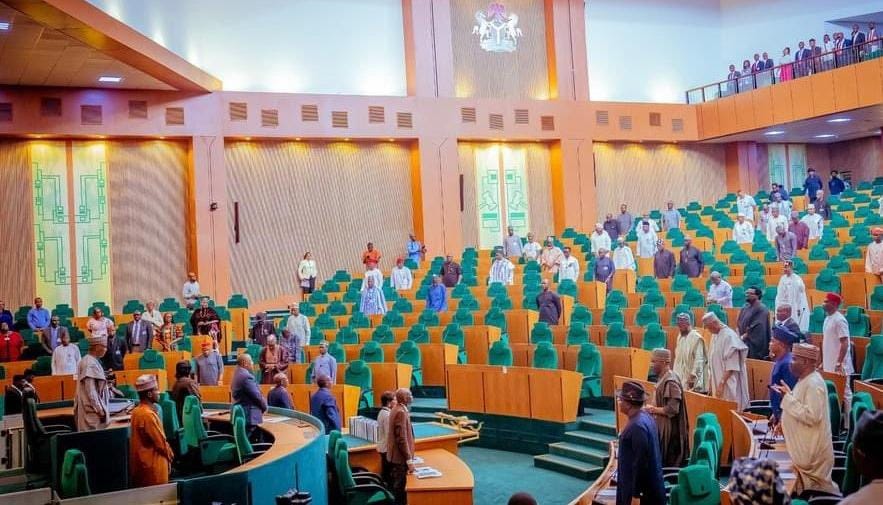
The House of Representatives yesterday increased campaign spending limits for candidates contesting elective offices, raising the maximum presidential campaign expenditure from N5 billion to N10 billion; and governorship’s, from N1 billion to N3 billion.
It also passed an amendment mandating the real-time electronic transmission of election results by the Independent National Electoral Commission (INEC).
These were part of the passage of the Electoral Act (Amendment) Bill 2025, following clause-by-clause consideration of the report of the House Committee on Electoral Matters, chaired by Adebayo Balogun.
Under the approved Clause 93(2), spending limits for National Assembly candidates were also increased, with senatorial candidates now allowed to spend up to N500 million, up from N100 million; and House of Representatives candidates, N250 million from the previous N70 million.
For state constituencies, the campaign expense ceiling was raised from N30 million to N100 million; chairmanship candidates, from N30 million to N60 million; councillorship candidates, N10 million from N5 million.
The House also approved a provision restricting individual or corporate donations to a maximum of N500 million per candidate.
For all breaking news and latest gist:
👉 JOIN GISTSMATE WHATSAPP CHANNELLawmakers Mandate e-transmission Of Election Results
The House approved a proposal mandating the real-time electronic transmission of election results by the Independent National Electoral Commission (INEC) to the IRev portal.
The approved clause 60(3) states that the “Presiding officer shall electronically transmit the results from each polling unit to the IREV portal in real time, and such transmission shall be done after the prescribed form EC8A has been signed and stamped by the presiding officer and/or countersigned by the candidates or polling unit agents, where available at the polling unit”.
The existing law does not mandate that the INEC transmit election results in real time.
Before the 2023 general elections, the INEC had promised that the results would be transmitted in real time.
The IReV portal was part of the technologies introduced by the INEC to ensure transparency and improve the integrity of the electoral process.
But the portal remained inactive for an extended period following glitches, even after voting was concluded at some polling units, prompting suspicion from many Nigerians.
The House also ratified a clause that would make the bimodal voter accreditation system (BVAS) the primary accreditation tool during election.
The approved clause 47(2) reads: “To vote, the presiding officer shall use a bimodal voter accreditation system or any other technological device that may be prescribed by the commission for the accreditation of voters to verify, confirm or authenticate the particulars of the intending voter in the manner prescribed by the commission.
“Where a bimodal voter accreditation system or any other technological device deployed for accreditation of voters fails to function in any unit and a fresh BVAS or technological device is not deployed, the election in that unit shall be cancelled and another election shall be scheduled within 24 hours if the commission is satisfied that the result of the election in that polling unit will substantially affect the final result of the whole election and declaration of a winner in the constituency concerned.”
Civil society organisations, political parties and other stakeholders have hailed the approval on electronic transmission of results and mandatory use of BVAS in the conduct of elections, saying, it will engender transparency in the electoral process.
WARNING: If You Are Not 18+, Don’t Click The Link Below 👇🫣
https://levitydinerdowny.com/kx6iepv2qm?key=6c14bd1d68e1eba721851f19778f5efe
Please don’t forget to “Allow the notification” so you will be the first to get our gist when we publish it.
Drop your comment in the section below, and don’t forget to share the post.
Never Miss A Single News Or Gist, Kindly Join Us On WhatsApp Channel:
https://whatsapp.com/channel/0029Vad8g81Eawdsio6INn3B
Telegram Channel:
https://t.me/gistsmateNG